

LONOKE — “This is probably one of the most exciting things I’ve been a part of in my career.” Arkansas Game and Fish Commission Fisheries Division Chief Tommy Laird could have been speaking for at least a dozen members of the AGFC’s staff when he said those words in mid-July at the unveiling of the Legacy Lunker trophy bass program that will kick off Jan. 1.
Arkansas Legacy Lunker combines citizen science with advanced hatchery technology and techniques to reinforce superior genetics in Arkansas’s largemouth bass populations.
Here’s the scoop in a nutshell: Any angler who catches a largemouth bass weighing 10 pounds or larger from Arkansas waters from Jan. 1-March 31 each year can call the AGFC’s new Lunker Line (833-948-2277) any time, day or night, and someone from the AGFC will meet them at the lake and take possession of the fish if it is healthy enough, return it to the AGFC’s Joe Hogan State Fish Hatchery in Lonoke and spawn it with genetically superior male bass to create improved fingerlings that will be stocked in the lake. The “Legacy Lunker” also will go back to the lake where she was caught once the spawning process is complete. In return for their participation, anglers will receive a free replica mount of their fish, crafted by Harper’s Pure Country Taxidermy, and be entered into a drawing to be held later in the year for a brand new boat.
This sort of legacy hatchery program is new to Arkansas, but not to the bass fishing world. Texas Parks and Wildlife has conducted its Sharelunker program in the Lone Star State for almost 40 years, and, according to Jeremy Risley, the AGFC’s Black Bass Program coordinator, much of Texas’ work served as the blueprint for success the AGFC’s Black Bass Program is following.
“The fisheries biologists in Texas have really been great partners in the launch of our Legacy Lunker program,” Risley said. “They’ve streamlined their process and allowed us to catch up with nearly four decades of their learning curve within a year or so. We couldn’t do this without that sort of support from a fellow state conservation agency. We’ve had to deviate from things slightly to fit the facilities and resources we have available, but we’ve been working hard to make tweaks to accommodate those differences.”
Jason Miller, assistant chief of AGFC’s Fisheries Division who is over the AGFC’s four warmwater hatcheries and single cold-water hatchery in the state, says the recent upgrade to the Lonoke hatchery will enable hatchery staff to incorporate the Legacy Lunker program at that hatchery while still keeping pace with the many other species they produce there, including producing the lion’s share of catchable-sized channel catfish for fishing derbies and Family and Community Fishing Program locations.
“Our hatcheries work with many different species to serve different angler groups, and even some nongame species to help with the health of entire populations,” Miller said. “The recent renovation at (Joe Hogan State Fish Hatchery) was the key to adding this new program in a way that our staff could continue all that other work that often goes on behind the scenes.”
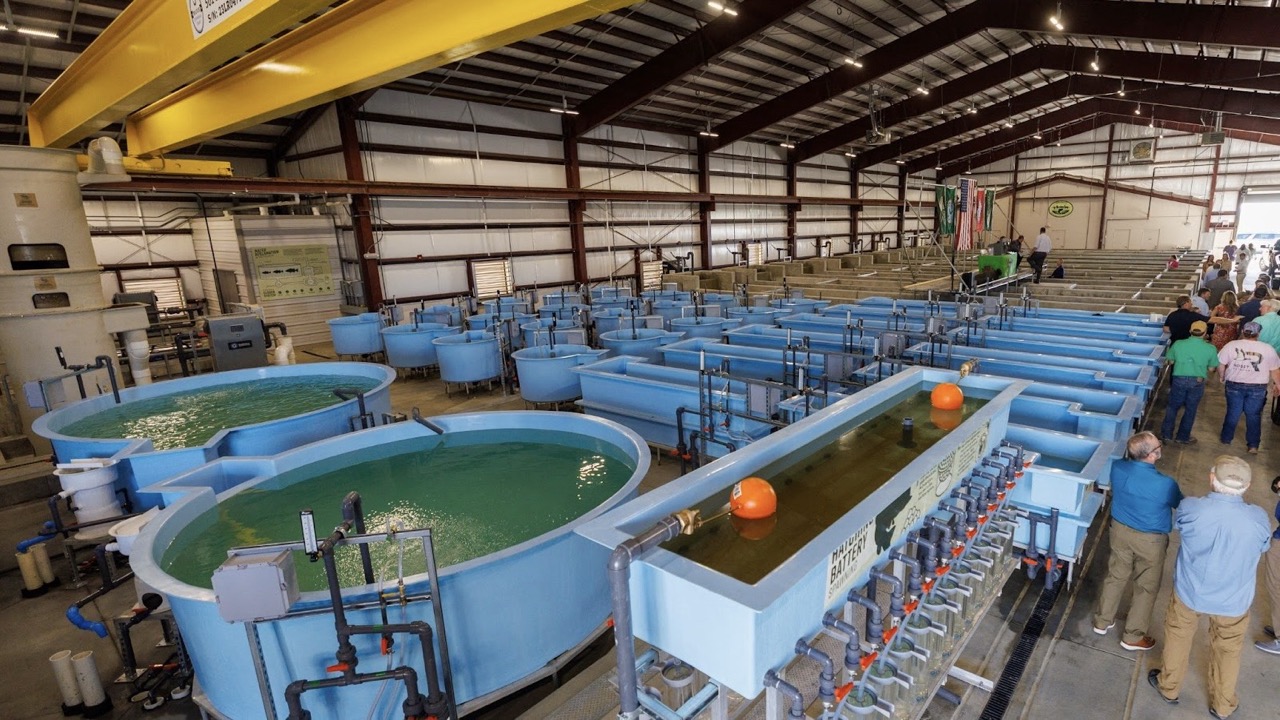
The new facility has 10 concrete raceways, dubbed “hawg troughs” that will be devoted to holding and spawning the fish anglers turn in while they’re here, but they’ll also be used outside of that three- to four-month window.
“The hawg troughs are actually undergoing the last bit of prep work right now,” Miller said. “They’re getting a coat of epoxy paint that will help prevent injuries and infections when the fish are added.”
Miller said the paint will cover the rough texture of the concrete, protecting a fish’s valuable slime coat and scales from abrasions.
“The porous nature of concrete also could harbor bacteria and fungus, and this epoxy paint will seal it, making it much easier for hatchery staff to sterilize the raceways between uses,” Miller said.
Once a fish is collected and brought to the Lonoke hatchery, staff will add it to one of the raceways, depending on where it originated.
“We’ll keep all of these big females separated by watershed,” Miller said. “We may have multiple fish from one or two lakes or river systems, but with the size of the raceways, there shouldn’t be any need to separate them. We have enough room to handle dozens of large females if they come from a few different watersheds.”
Staff will cover the raceways with a screen that allows some light to penetrate but helps prevent disturbance to the fish. They will also monitor water temperature in the raceway, keeping it cold enough to prevent the fish from spawning until they are ready to start the entire batch of Lunkers for the year.
“The indoor facility is going to make that much easier,” Miller said. “Before, we did all of our bass spawning in ponds outside. Female fish were placed in cages with spawning mats and males, and we were up to the whims of Mother Nature to provide longer days and warmer water. Now, we can control those factors to have the fish spawn when it is the best time for us to collect and hatch those eggs.”
An area where Arkansas is hoping to leapfrog Texas’ program is with the male component of the Legacy Lunker process. Instead of working for generations to find male fish with big fish genetics, the AGFC is working with a partner from private industry, Red Hills Fishery in Georgia. This company has worked for years to identify the exact genetics that contribute to large fish growth in Florida bass, and they’re sharing that knowledge and expertise in the process.
“We’re bringing in their TITAN MAXX line of largemouths to be the males that spawn with our angler-contributed lunkers,” Miller said. “These are essentially thoroughbred bass that have been identified as proven producers of fast- and large-growing bass. Red Hills is also working with us to streamline our hatchery process and troubleshoot any issues that may come up. Red Hills also is testing the Florida bass broodstock we have on hand to determine if they have the same genetic markers for high growth. We want as much of the fish used in Legacy Lunker to originate from Arkansas as we can.”
Risley says the aspect of homegrown heavyweights is something anglers should be proud of as well.
“These aren’t just fish that we got from somewhere that we hope will grow big,” he said. “These are fish that came from Arkansas water, so we know they have the right genetics to grow big here. The fingerlings they produce will go to the body of water where they came from, and the female will be returned to the water once she’s spawned and recovered.”
Miller says by spawning these fish, there’s a much greater potential for the genetics to be increased in the lake where they are released.
“This isn’t about adding more fish, but about increasing the chances of the fish that are there having those ‘big fish’ genetics,” Miller said. “In the wild, that 10-pounder may pull off one successful spawn a year if weather conditions, nest robbers and water level fluctuations don’t destroy her nest. In the hatchery, we can get two to three spawns from that fish in one spring with a huge hatching success. Those newly hatched fry also have a much greater chance of survival to fingerling stage, and those fingerlings have a much better chance of being adults to carry on those genetics and grow to trophy size.”
“Plus, it increases our partnership with our angling community,” Risley added. “Cooperation from Arkansas’s bass anglers is key to this program’s success.”
Miller says anglers should keep these three things in mind this spring if they land a 10-pound bass and want to increase the likelihood of it being healthy enough to donate to the program:
- Livewell and prosper:
Make sure your livewell is clean and free of fungus or grime before angling, and run the aerators constantly after adding the big fish. If you want to add salt or commercial therapeutic additives, follow the instructions on the labels. Don’t overdo the additives. - Don’t get handsy:
Get the fish in the livewell quickly and wait to take photos of your trophy until after the Legacy Lunker team arrives. They will help you take pictures and memorialize your catch, but the less stress the fish sees from handling, the better. Multiple photo sessions only add undue stress that could ultimately hurt the fish. - Details make a difference:
Be ready to give all the information about your catch as possible when you call the number to report the catch. The more details the team knows about where and when the fish was caught (including surface water temperature and depth of the catch), the better they can be prepared to care for that fish once they arrive. Fish caught from deep water may need to be fizzed or need fin clip weights to help it balance until its air bladder recovers, but wait to talk to the biologist on the phone before attempting any first-aid fixes.
Call the Lunker Line at 833-948-2277 to report your catch. For more information, visitwww.agfc.com/legacylunker.