



By Rebekah Hall
U of A System Division of Agriculture
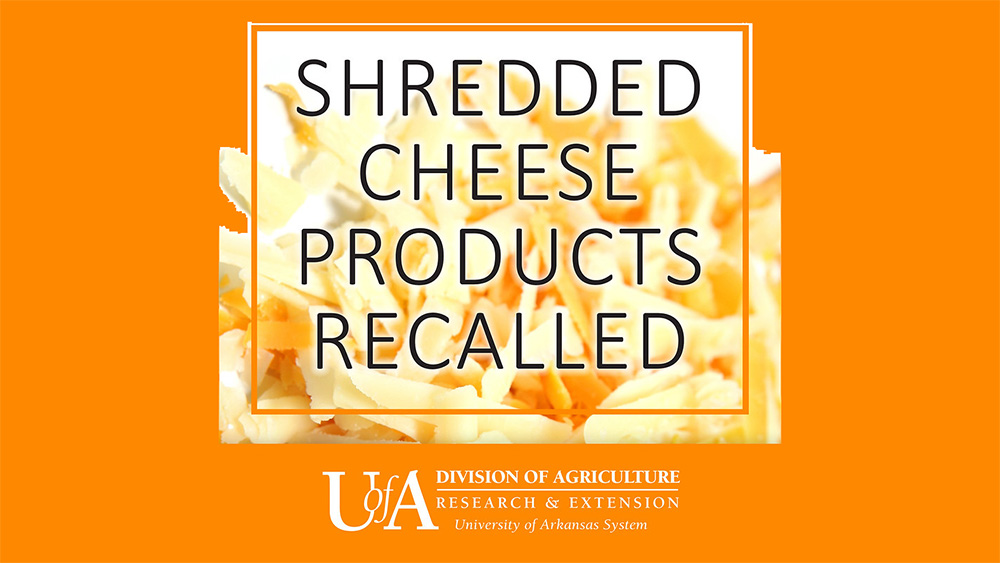
LITTLE ROCK — The U.S. Food and Drug Administration has a list and is advising consumers to check it twice before whipping up any cheesy dishes this holiday season. Several shredded cheese products from Great Lakes Cheese Co. were recently recalled for potentially containing metal fragments.
Great Lakes Cheese Co. initiated a recall of seven shredded cheese products packaged under dozens of different names in early October. On Dec. 1, the FDA upgraded the recall’s risk classification to Class II, the second-highest designation by the organization.
Quad Whitson, extension program associate for culinary nutrition and food safety for the Division of Agriculture, said the cheeses were distributed under various store brands at major retailers, including Walmart, Target and Aldi.
“While this recall is precautionary, it’s important to stay informed and take appropriate steps to ensure safety,” Whitson said. “Consumers should check the batch number and sell-by date printed on their cheese packaging. Recalled items include sell-by dates ranging from January through March 2026, depending on the brand and product.”
For a full list of affected batch numbers and dates, visit the FDA’s recall page.
The recalled products include Always Save low-moisture part-skim mozzarella shredded cheese, Happy Farms by Aldi Italian style shredded cheese blend, Great Value Italian style shredded cheese blend, Good & Gather Mozzarella & Provolone Classic and several more.
Whitson said the metal contamination could have occurred during the processing of the cheese products.
“Food processing involves a lot of moving parts, and sometimes things can go wrong,” Whitson said. “Contamination like metal fragments often comes from equipment — think a worn-down blade, a loose bolt or a broken piece of machinery. Any food that runs through mechanical equipment, whether it’s cereal, frozen veggies, ground meat or ready-to-eat meals, has some risk of exposure.
“To prevent this, plants use tools like metal detectors, X-ray machines and magnets to catch stray fragments,” Whitson said. “These systems are highly effective, but no process is perfect.”
If a consumer finds any affected products, do not eat them. Dispose of the cheese or return it to the store for a refund.
“Share this information with your community members, friends and family to help spread awareness,” Whitson said. “It’s important that consumers stay alert for product recalls because they often involve some serious safety risks, such as contamination, undeclared allergens or defects. Ignoring recalls can lead to illness, injury or even worse.”
Whitson recommends checking trusted sites, including recalls.gov, the FDA’s website, or the Consumer Product Safety Commission and signing up for email alerts.
“Registering your products and sharing recall news with friends and family are simple steps that help keep everyone safe,” Whitson said.
Learn more about food safety resources at the Food Safety page on the Cooperative Extension Service website or contact Whitson at qwhitson@uada.edu.
To learn about extension programs in Arkansas, contact your local Cooperative Extension Service agent or visit www.uaex.uada.edu. Follow us on X and Instagram at @AR_Extension. To learn more about Division of Agriculture research, visit the Arkansas Agricultural Experiment Station website: https://aaes.uada.edu. Follow on X at @ArkAgResearch. To learn more about the Division of Agriculture, visit https://uada.edu/. Follow us on X at @AgInArk.