

The Arkansas Legislative Council has approved an amendment to the Arkansas Department of Agriculture Rules on Pesticide Use establishing requirements for the use of warfarin-based bait products labeled for the control of feral hogs.
The amended rule, 2 CAR Part 70, became effective June 29, 2026.
The rule creates a new Class J pesticide classification for all pesticides containing warfarin when used as a feral hog toxicant. The requirements apply in addition to the federal product label and govern when, where and by whom such products may be used in Arkansas.
The effective date of the rule does not authorize the immediate sale or use of feral hog toxicants in Arkansas. Before a specific product may be sold or used in the state, several additional requirements must be met.
Future state registration
Before a specific product may be sold or used in Arkansas, it must be registered by the Arkansas State Plant Board, which administers pesticide registration through the Department of Agriculture. That registration is a separate step that has not yet occurred.
Restricted-use dealers and applicators
Feral hog toxicants are restricted-use products that may be sold only by licensed restricted-use pesticide dealers. They may be purchased only by licensed applicators who have completed required product-specific training.
Federal product label requirements
Products must be used strictly according to their U.S. Environmental Protection Agency-approved product labels. Under federal law, it is a violation to use a product in a manner inconsistent with its labeling.
The rule also limits where and when warfarin-based feral hog bait may be used.
Black bear county restriction
Use is prohibited in any Arkansas county where black bears have been harvested since 2023, according to the Arkansas Game and Fish Commission Black Bear Harvest Report.
Seasonal restriction
In all other counties, use is prohibited from April 1 through Nov. 30. Use is therefore allowed only from Dec. 1 through March 31.
In addition, applicators must hold a valid commercial, noncommercial or private applicator license and complete label-specific training provided by the product registrant.
Applicators also must keep records of each application for two years. Required records include the application location, including GPS information; application dates; product brand; EPA registration number; and the applicator’s name.
Warfarin-based toxicants provide an additional tool that may be used to assist with feral hog control efforts. The Department of Agriculture said it will continue working with producers, dealers and applicators to ensure the requirements are clearly understood.
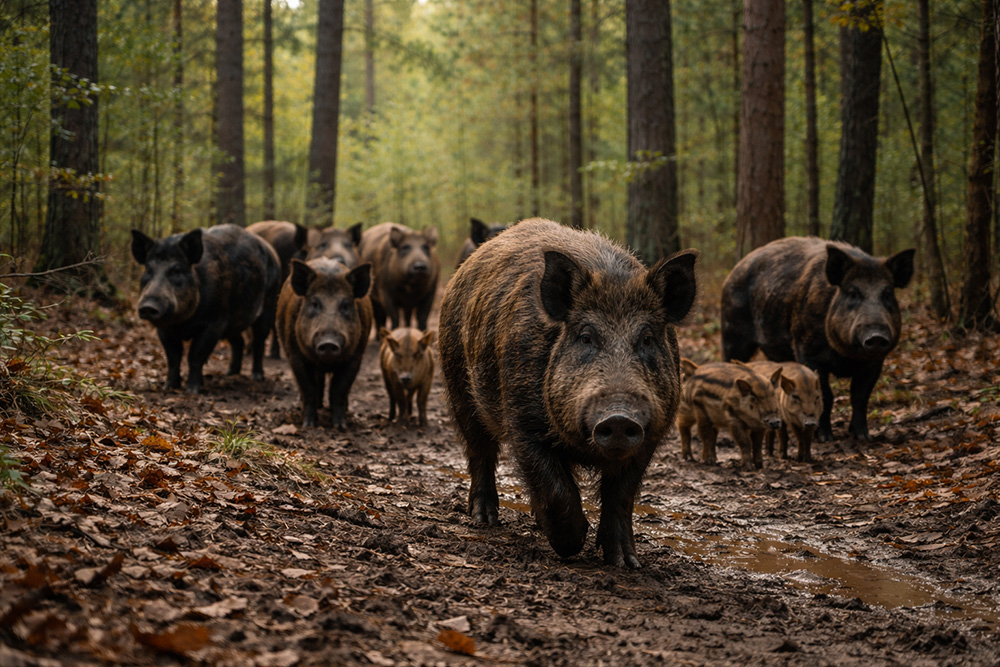
Feral hogs cause significant damage to agricultural lands and natural resources across Arkansas. Establishing a distinct category for these products supports ongoing efforts to manage and reduce feral hog populations.
In addition, the One Big Beautiful Bill Act authorized $47 million for the federal Feral Swine Eradication and Control Program. Arkansas is one of 14 states selected to receive funding for feral hog eradication efforts over a five-year period.
More information about feral hog eradication efforts in Arkansas is available through the Arkansas Department of Agriculture.