


By Ryan McGeeney
University of Arkansas Division of Agriculture
LITTLE ROCK — With all but six Arkansas counties under a burn ban as of Thursday and elevated risk of wildfires across the state, experts with the Cooperative Extension Service are urging residents to take precautions to protect their land, property and lives.
Jaret Rushing, extension forestry instructor for the University of Arkansas Division of Agriculture, said even residents living in one of the few counties not currently under a burn ban should take wildfire risk seriously.
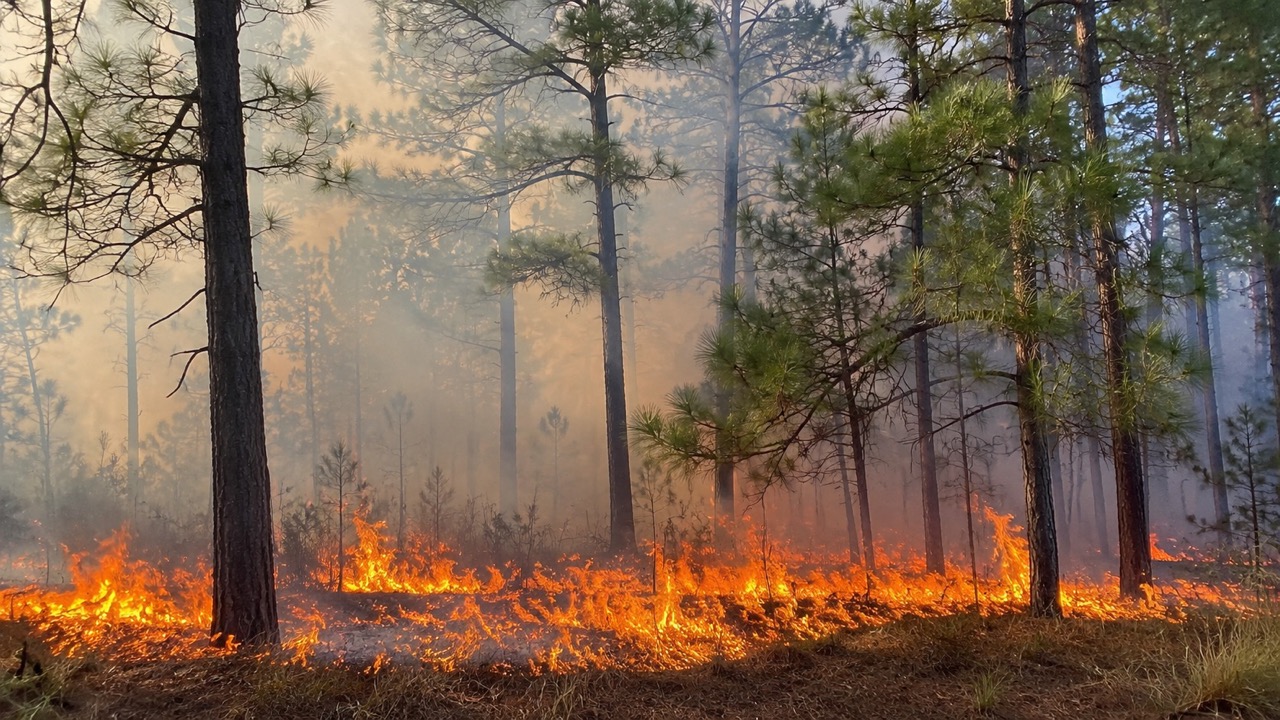
“The weather pattern we’re in — a high-pressure system with swirling winds — is a boiling pot for wildfires,” Rushing said. “The stress that the trees have been under for the past 12 months with the drought has really started to show. There’s been a lot of early leaf-fall this year as well, so there’s a lot of litter on the ground that could act as a fire fuel.”
County judges are responsible for issuing burn bans for their respective counties. According to the Arkansas Department of Agriculture, 50 of the state’s 75 counties were in moderate wildfire danger as of Wednesday. The remaining 25, clustered in central and south Arkansas, were in high wildfire danger, defined by the department as a situation in which fires “ignite easily and spread quickly.”
“Unattended brush fires and campfires are likely to escape. Fires may become serious if not attacked early,” according to the department’s website.
“From a homeowner perspective, one thing I would recommend is to get rid of all leaf litter in your gutters, on your roof, beside your house and around your yard, because that is going to add fuel to any potential fire,” Rushing said. “Avoid any outside burning, even if you’re not in a county that’s under a burn ban right now, because all it takes is one ember. With as dry as the forests are right now, one ember, with the winds we’re having, could start a very bad forest fire.”
Although weekend rainfall has eased the severity of drought conditions in some areas of Arkansas, most of the state is still abnormally dry. According to the U.S. Drought Monitor, portions of some counties, including Chicot, Desha and Drew counties, are in extreme or even exceptional drought, the most intense category.
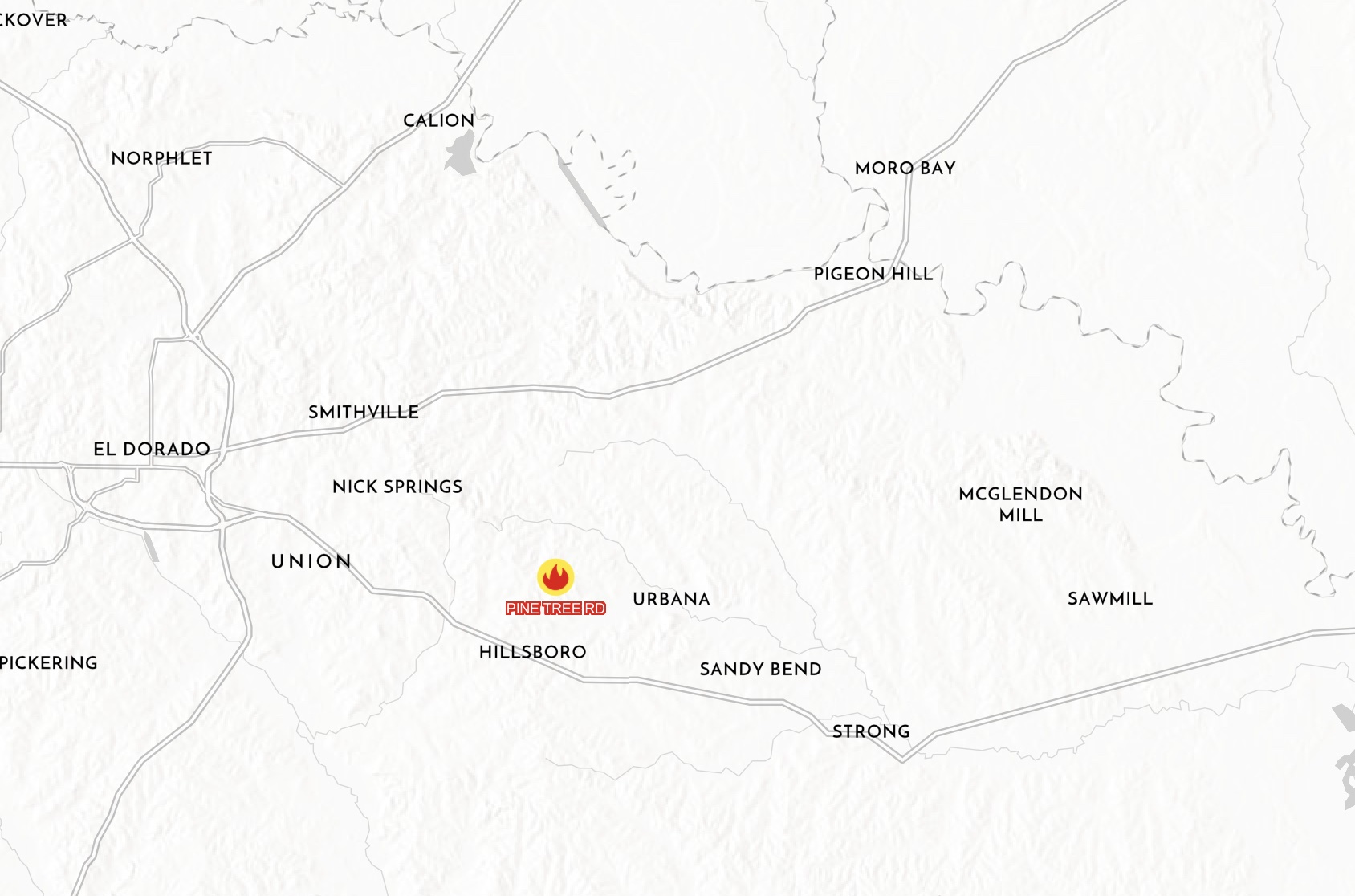
On Aug. 18, the Arkansas Department of Agriculture announced a new online dashboard dedicated to tracking wildfires in the state. According to the website, there have been more than 1,000 wildfires in Arkansas in 2026, affecting more than 27,000 acres.
Shane Gadberry, assistant vice president for agriculture and natural resources for the Division of Agriculture, said that while wildfires may primarily be thought of as a rural problem, all residents, regardless of where they live, should be prepared to evacuate in case of a fire emergency.
“Have a fire extinguisher in the kitchen and workshop to prevent an isolated fire that could be contained from becoming a much larger challenge to control,” Gadberry said. “Avoid outdoor grilling, especially with charcoal.”
Gadberry said families should agree on a meeting place and safe routes to get there, ensuring that everyone knows how to get there on their own if they’re separated from the rest of the family. He also advised families to assemble a “go bag,” especially in areas where evacuation is likely.
“The ‘go bag’ should include medications, assistive devices, identification, some form of money, cell phone chargers, changes of clothes if there is potential for extended time from home, water, snacks and pet care items,” he said.
“Keep cell phones charged and handy for emergency calls and keep plenty of fuel in the vehicle if relocation is required,” Gadberry said. “Keep important documents in the home in a fireproof safe.”
Gadberry said that around farms, it’s especially important to inspect equipment for any buildup of thatch that can catch fire.
“I’ve seen fires develop from hidden bird nests on tractor engines, side-by-side engines and trucks idling in tall dead grass,” Gadberry said. “Mounting fire extinguishers in motorized equipment creates easy access for quick response.
“Be weather-wise,” he said. “If it’s extremely hot and dry, lightning from a thunderstorm can force an evacuation.”
Gadberry said that while many farmers keep ATV or tractor sprayers flushed and full of water during dry conditions, it’s best to avoid activities such as brush hogging since “either hitting debris or equipment failure could start a fire.”
He also advised that farmers “avoid storing large lots of hay in a single location, if possible, to minimize losses in the event of a fire near a hay lot.
“If relocating livestock is an option, have a plan in place on how soon that needs to take place based on gathering, loading and hauling distance,” he said.
The Arkansas Department of Agriculture organizes the Arkansas Firewise USA Program, which provides information and resources to help assess and mitigate wildfire risk. For landowners faced with salvaging damaged timber stands after a wildfire or other natural disaster, Rushing co-authored “Steps for Assessing Storm-Damaged Timber for Salvage Operations” through the University of Arkansas at Monticello’s Arkansas Center for Forest Business.
To learn about extension programs in Arkansas, contact your local Cooperative Extension Service agent or visit uaex.uada.edu. Follow us on Facebook and Instagram. To learn more about the Division of Agriculture, visit uada.edu. To learn more about ag and food research in Arkansas, visit the Arkansas Agricultural Experiment Station at aaes.uada.edu.
About the Division of Agriculture
The University of Arkansas Division of Agriculture’s mission is to strengthen agriculture, communities, and families by connecting trusted research to the adoption of best practices. Through the Agricultural Experiment Station and the Cooperative Extension Service, the Division of Agriculture conducts research and extension work within the nation’s historic land grant education system.
The Division of Agriculture is one of 22 entities within the University of Arkansas System. It has offices in all 75 counties in Arkansas and faculty on three campuses.
Pursuant to 7 CFR § 15.3, the University of Arkansas Division of Agriculture offers all its Extension and Research programs and services (including employment) without regard to race, color, sex, national origin, religion, age, disability, marital or veteran status, genetic information, sexual preference, pregnancy or any other legally protected status, and is an equal opportunity institution.