



WARREN, Ark. — As grills and smokers fire up across the South this summer, one University of Arkansas Division of Agriculture expert says there’s an important distinction many people still debate: grilling and barbecue are not the same thing.
“‘Barbecue,’ as anyone in the South can tell you, is a loaded word,” said Janeal Yancey, extension animal science instructor for the University of Arkansas Division of Agriculture.
“It means different things to different people,” Yancey said. “But in my mind, barbecuing is a low and slow smoking process.”
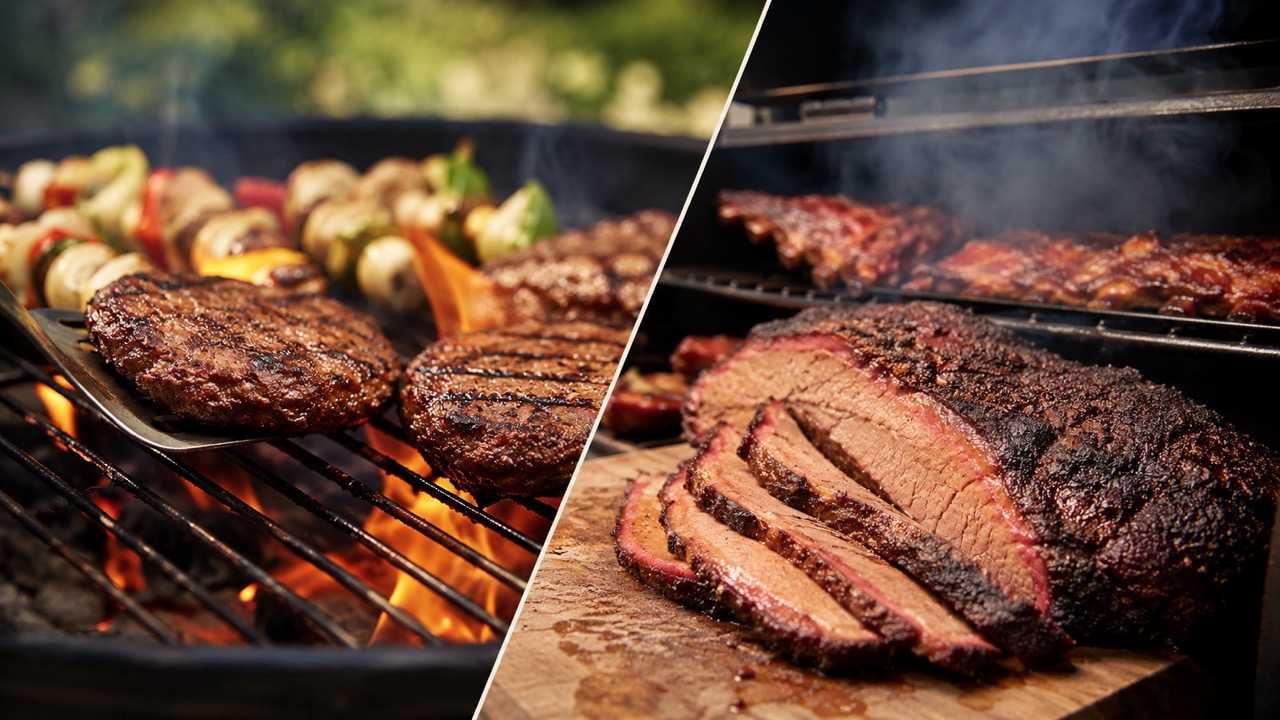
Yancey, who grew up in Texas, said she would never describe cooking hamburgers over direct heat as “barbecuing.”
“If I was going to cook a hamburger on a grill for Memorial Day, I’d say I’m grilling it,” she said. “But I might say in the same sentence that I’m having a ‘backyard barbecue.’”
According to Yancey, grilling and smoking create different flavors because of two different chemical reactions.
“When we grill things, such as hamburgers, you’re using a really high heat, usually using some kind of wood fire or charcoal, that creates a char on the surface of that meat,” she said. “It makes a really nice brown or blackening color, and it creates a delicious flavor.”
That flavor comes from what scientists call the Maillard reaction, where sugars and proteins react under high heat to produce the browned crust and flavor many people associate with grilled foods.
“You probably have to go back to cavemen cooking meat over a fire to understand why our brains like that,” Yancey said.
Smoking meat, however, involves a slower cooking process at lower temperatures.
“With barbecue — that would be more of the low and slow smoking — there’s some different chemistry happening there,” Yancey said.
As wood burns, smoke interacts with the fats and proteins in meat, creating a smoky flavor while also slowly breaking down the meat’s structure, leading to the tender texture commonly associated with barbecue.
“The pink color comes from the nitric oxide interacting with the proteins in the meat,” Yancey said. “You’ll see that in hams, hot dogs — any of our cured meats.”
Yancey said many pitmasters combine smoking and grilling techniques to achieve both a smoky interior and a charred exterior on meats such as brisket.
Along with flavor, Yancey emphasized food safety during cookouts and backyard gatherings.
“When it comes to cooking things quickly, especially with ground meat such as hamburgers, make sure to get the whole patty to 160 degrees Fahrenheit,” she said.
She also encouraged cooks to use meat thermometers instead of relying on color alone to determine doneness.
“Don’t try to use color to assess whether it’s done,” Yancey said.
Cross-contamination is another concern, especially when handling raw and cooked meats.
“It’s important to remember that plates are a one-way street,” she said. “You’ve got one plate carrying uncooked meat that goes out to the grill — that needs to then go in the sink or the trash. Then you’ve got a different, clean plate that carries cooked meat from the grill to the serving table.”
For more information about extension programs in Arkansas, contact the local Cooperative Extension Service FCS Agent Penny Waits or visit the University of Arkansas Division of Agriculture online.