



LITTLE ROCK — With dove season right around the corner and waterfowl season on the horizon, now’s the time to make sure the areas you plan to hunt don’t fall under the legal definition of baiting, particularly in agricultural fields.
By Randy Zellers, Arkansas Game and Fish Commission.
According to federal regulations, an area is considered baited and illegal to hunt over if salt, grain or other feed has been placed, exposed, deposited, distributed or scattered in such a way as to attract migratory game birds where hunters are attempting to take them. Even after the complete removal of the bait, the area must rest for a minimum of 10 days before being legal to hunt.
Specifically, it is legal to hunt doves:
- where seeds or grains have been scattered (not piled) as a result of a normal agricultural operation or agricultural soil-stabilization practice, including top-sowing or aerial seeding;
- where grain grown on the land is scattered solely as the result of the manipulation (e.g., mowing, flattening, disking) of an agricultural crop;
- over standing crops;
- over standing or manipulated natural vegetation;
- over “hogged down” fields where livestock have fed on standing crops, or
- over feedlots.
Waterfowl regulations are more restrictive than those on dove hunting. Unlike doves, waterfowl hunting is not permitted when unharvested crops are manipulated (rolled or mowed). It is legal to hunt over unharvested crops that were left due to poor quality, insect infestation or were otherwise uneconomical to harvest. However, the plants must not have been manipulated before flooding. This is particularly important for hunters in areas where an occasional Canada goose may make an appearance, especially while dove hunting. Hunters who attempt to take any waterfowl also may not have any lead shot in their possession while hunting, so it’s best to let those birds of opportunity fly by unless you’re only loaded with steel or other nontoxic shot. Hunters should also let those geese pass while dove hunting on a field that has been legally prepared for dove hunting by mowing, disking or other form of manipulation. Those fields may be legal for dove hunting but not for waterfowl hunting.
Top-sowing wheat over a disked field as a cover crop is a common practice that can offer green vegetation for deer and other game animals in winter and attracts doves before the seed germinates. It also falls under normal agricultural practices, as long as the planting rate does not exceed normal agricultural rates for cover crops in Arkansas.
The University of Arkansas Cooperative Extension Service has established a list of general guidelines for planting rates and dates for all cover crop species that fall within the bounds of normal agricultural practices. A search on their website www.uada.edu or visit to one of their county offices can guide you through the planting process.
Quite a few hunters who don’t have friends or family with agricultural land join in on dove season through pay-to-hunt operations on opening weekend. Hunters visiting a field for the first time on opening weekend still have a responsibility to learn about the field’s preparation to protect themselves from fines and penalties:
- Ask first: Send a friendly email or text to the landowner to ask if any grain or feed has been on the area for the past 10 days. The response, in writing, can help if there’s a problem later.
- Take a stroll: Inspect the area before bringing a gun to the field. Any type of grain that was not grown in the field or is unevenly distributed is an indicator of baiting.
- Look closely: Pay attention to any spots with unusually heavy concentrations of doves. If the field is freshly plowed, check both the surface and under any loose soil for grain that may have just been turned over.
Visit www.agfc.com/dove for more information on dove hunting and public dove fields in Arkansas.
CUTLINES:
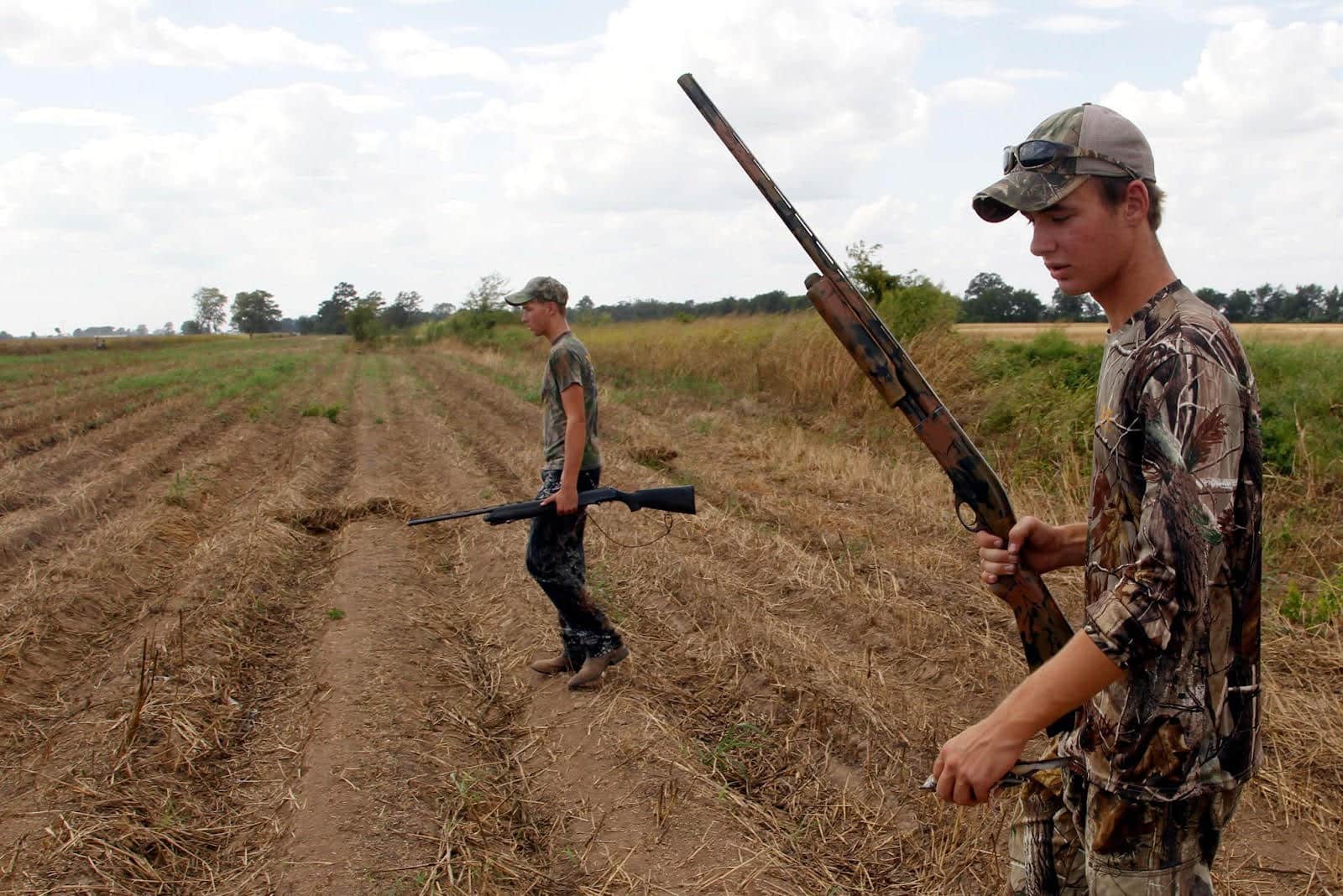
TWO HUNTERS IN FIELD
Keep an eye out for piles of grain or other indications that a field has been baited. AGFC photo.
HUNTER SHOOTING
Doves may be hunted over manipulated agricultural crops and topsown fields; waterfowl may not. AGFC photo.
DOVE
Arkansas dove hunting season opens Sept. 6, 2025. AGFC photo.