



Fall color can be a little slow getting to Bradley County.
While photographs from the Ozarks may already be showing hillsides covered in red and gold, South Arkansas often hangs onto summer green well into October. Then, almost quietly, individual trees begin to change.
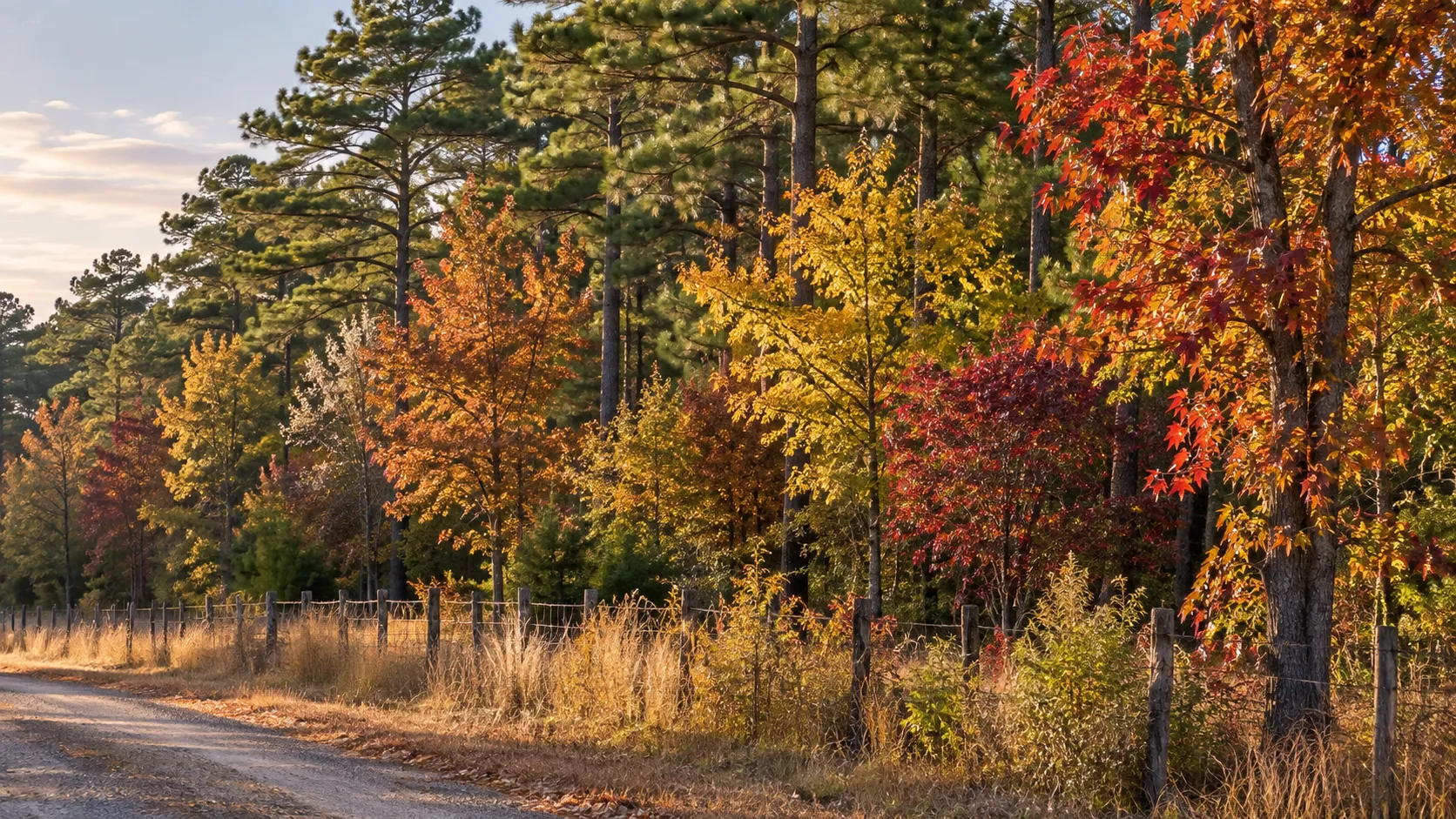
A splash of red appears along a fence row. A hickory turns yellow beside a country road. Sweetgums begin showing several colors at once. Eventually, the hardwoods scattered among Bradley County’s seemingly endless pines transform the landscape.
And if you know what you’re looking at, the colors can tell you which trees are responsible.
Blackgum: One of the first signs
One of the earliest trees to announce that fall is coming is also responsible for some of the brightest red in the woods.
Blackgum, also called black tupelo, is native across Arkansas and can be found in both upland and lowland areas. The University of Arkansas System Division of Agriculture describes it as having some of the most reliable red fall color of any native tree.
Its leaves can turn a striking scarlet while many of the trees around it are still green.
That means when you spot a surprisingly red tree standing out against otherwise green woods early in the season, blackgum is one possibility.
Sweetgum: The show-off
Few trees do fall quite like a sweetgum.
Sweetgum is native to Arkansas, and its familiar star-shaped leaves can produce an impressive mixture of yellow, orange, red and sometimes deep reddish-purple on the same tree. Extension horticulturists have noted that Arkansas sweetgums often lean particularly toward orange and red.
Of course, homeowners may have another opinion of sweetgum trees once those spiky gum balls begin covering the yard.
But strictly from a fall-color standpoint, they’re difficult to beat.
Hickories bring the gold
If blackgum and sweetgum provide the reds, hickories help supply the gold.
Several hickory species grow in Arkansas, and their fall contribution generally falls on the yellow side of the spectrum. Mockernut hickory, for example, can produce the rich golden-yellow color that stands out especially well against dark green pine.
Hickories don’t always demand attention individually. Instead, their yellow leaves become part of the broad golden backdrop that makes a South Arkansas woodland finally look like fall.
Dogwoods don’t quit after spring
Most people probably associate flowering dogwoods with their white blooms in spring.
They deserve another look in autumn.
The native flowering dogwood can develop attractive maroon foliage as the growing season ends. Because dogwoods are generally smaller understory trees, their color often appears below the taller canopy rather than dominating the skyline.
That can produce layers of fall color in wooded areas — reds and maroons underneath taller yellow and brown hardwoods.
Oaks save some of the show for last
Bradley County has no shortage of oaks, and they are often among the trees that help extend the season.
Different oak species behave differently. Some produce strong reds or maroons, while others settle into orange, russet or brown.
Shumard oak, a native species found throughout Arkansas, typically changes late and can produce shades ranging from red and brown to yellow. Oaks in general tend to be among the later trees to reach their fall peak.
That helps explain why an Arkansas woodland can continue changing even after some of its brightest early trees have already dropped their leaves.
Red maples add another splash
Red maples can provide some of the most noticeable color around homes, streets and wetter areas.
The species is native to river bottoms across a wide range of the eastern United States, and its fall color can range considerably, though good specimens can produce brilliant red.
Cultivated varieties planted around homes and businesses are often selected specifically for dependable fall color.
And don’t overlook the pecan
Pecan trees aren’t necessarily the stars of the fall-color show, but they belong in the South Arkansas picture.
Their leaves can develop a deep yellow in a good year.
For many people around Bradley County, though, what is falling beneath the tree may be more interesting than the leaves themselves.
By autumn, pecans dropping into yards and old homeplaces are as much a sign of the season as changing foliage.
The pines make the colors stand out
Some of the most recognizable Bradley County scenery comes from something that doesn’t change color at all.
The loblolly pines that dominate so much of the South Arkansas landscape remain green while neighboring hardwoods change around them. Pine-hardwood forests are characteristic of this part of Arkansas, with loblolly pine especially important in wetter lowlands.
That evergreen backdrop is part of what makes an orange sweetgum, yellow hickory or red blackgum stand out so dramatically.
Our fall may not look exactly like Vermont or the Ozarks.
It isn’t supposed to.
Why some years are prettier than others
The calendar alone doesn’t determine how good the show will be.
Shortening daylight helps trigger the seasonal change in trees, while weather influences how intense the colors become. Warm, sunny days combined with cool nights can help produce especially vivid color. Drought, early freezes, warm nights and other stresses can change both the timing and quality of the display.
It also means fall doesn’t arrive everywhere at once.
One tree can be glowing orange while another beside it remains completely green.
That’s particularly noticeable in South Arkansas, where warm weather can hang around long after the calendar says autumn has arrived.
But eventually it does arrive.
And when it does, Bradley County’s fall color isn’t produced by one spectacular species.
It’s the mixture that makes it ours — red blackgums, multicolored sweetgums, golden hickories, maroon dogwoods, late-changing oaks and yellowing pecans scattered through a landscape that remains unmistakably pine country.
Sometimes you just have to look a little closer to see the show.