



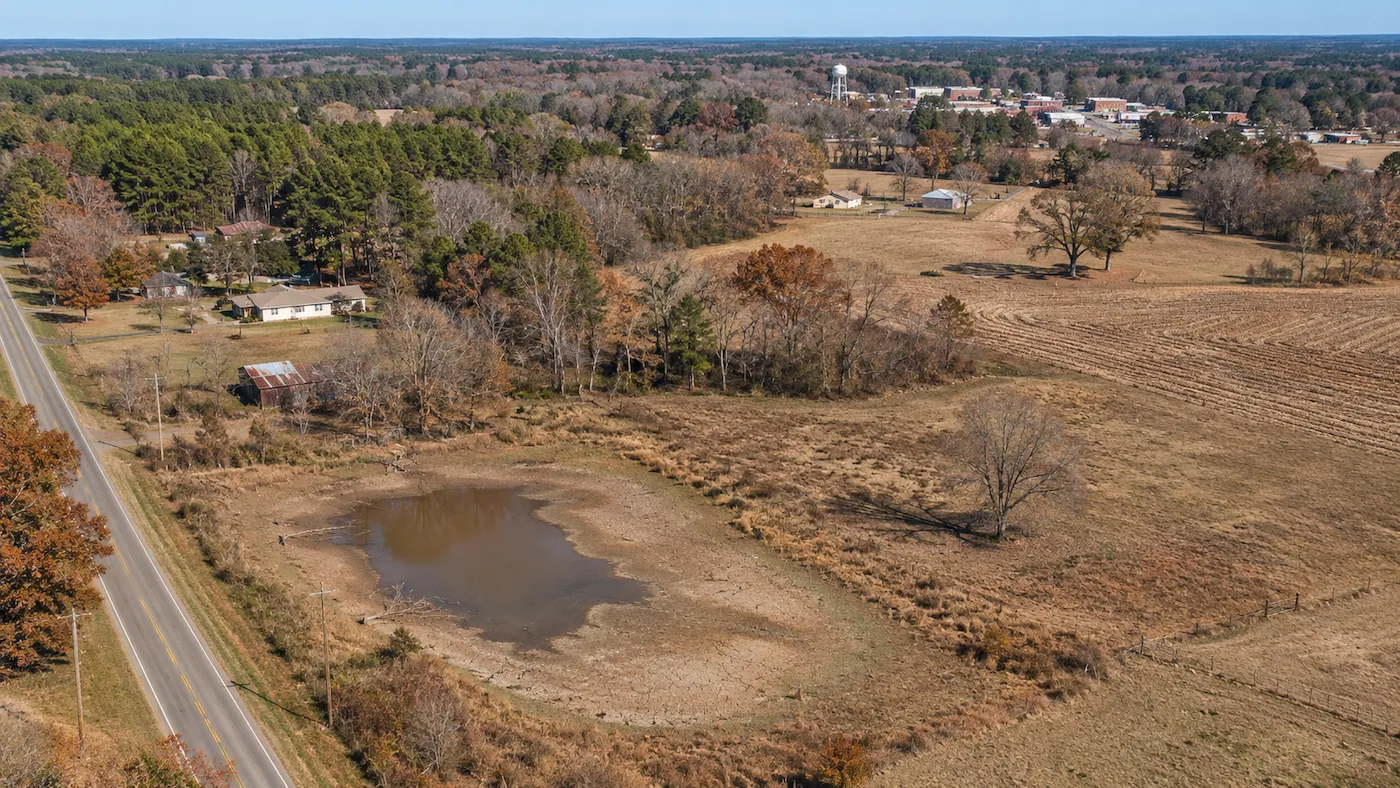
South Arkansas remains in the grip of an extraordinary drought, with much of the region experiencing the most severe drought classification possible and little meaningful rainfall expected in the immediate forecast.
For residents of Bradley County and surrounding communities, months of unusually dry conditions have brought persistent burn bans, increasing wildfire concerns, and growing worries about just how much rain will be needed to restore normal conditions.
According to the latest U.S. Drought Monitor, released Thursday, November 12, all of Bradley County is now classified in D4 Exceptional Drought, the highest category on the five-level drought scale. Much of southern Arkansas, including neighboring counties, is experiencing similarly serious conditions.
The situation extends well beyond South Arkansas. The latest figures show that 49.53 percent of the entire state is experiencing exceptional drought, up from 39.72 percent just one week earlier. An astonishing 84.6 percent of Arkansas is now classified as being in either extreme or exceptional drought.
The numbers illustrate just how dramatically conditions have deteriorated in recent months.
According to a November 12 report from the National Integrated Drought Information System, Arkansas experienced its warmest August-through-October period on record in 2026. That same three-month stretch was also the state’s third-driest on record.
In Bradley County, the shortage of precipitation has been particularly striking.
As Saline River News reported in early October, NOAA-based county precipitation estimates indicated that Bradley County had received approximately 22.14 inches of rainfall through September 28, just 53 percent of the amount normally expected by that point in the year.
That represented a rainfall deficit of roughly 19 to 20 inches, a tremendous amount of missing moisture for an area accustomed to receiving substantial annual rainfall.
Although showers have provided occasional relief since then, the underlying drought has persisted.
Earlier this month, approximately 1.25 inches of rain was recorded at Saline River News headquarters in Warren, temporarily improving conditions enough for Bradley County officials to lift the countywide burn ban on November 4.
That relief proved short-lived. By Monday, November 9, county officials had reinstated the ban, citing continuing dangerously dry conditions.
The restrictions have become an almost constant concern across the region, where extended periods without meaningful rainfall have left grass, leaves, brush, and timber increasingly susceptible to fire.
As of Monday, November 16, burn bans were reported in 27 Arkansas counties, including Bradley, Cleveland, Drew, Ashley, Calhoun, Lincoln, and Union counties.
Local firefighters have already experienced the consequences of the dry conditions. In October, the Bradley County Rural Fire Department urged residents to stop outdoor burning after responding to fire activity amid extremely dry vegetation.
Beyond the threat of wildfires, the drought is placing pressure on agriculture, livestock operations, and natural water resources. The National Weather Service reports that streamflows across numerous Arkansas rivers have fallen below or well below normal levels, while persistent dry conditions have significantly affected livestock and agricultural production.
Unfortunately, the immediate weather forecast offers little indication that substantial relief is on the way.
According to the National Weather Service forecast available Monday, November 16, Warren is expected to experience predominantly sunny and dry conditions throughout the workweek.
Temperatures are expected to climb from around 68 degrees Tuesday to the lower and middle 70s Wednesday and Thursday, with highs near 76 degrees Friday and 77 degrees Saturday.
The next possibility of rainfall arrives late Saturday, November 21, and Sunday, November 22, when the National Weather Service is forecasting a 20 percent chance of showers for the Warren area.
Forecasters expect a cold front to move across Arkansas during the weekend, potentially producing precipitation across the state. However, the National Weather Service has indicated that rainfall totals may be relatively modest, meaning any showers that develop are unlikely to provide widespread drought relief.
There is, however, some reason for longer-term optimism.
The National Weather Service and NOAA’s Climate Prediction Center indicate that above-normal precipitation may become more likely during the coming winter months. Current seasonal outlooks favor improving drought conditions across much of Arkansas through January 2027.
That does not necessarily mean the drought will end by then. With substantial rainfall deficits accumulated over several months, meaningful recovery will likely require repeated periods of significant precipitation rather than one isolated rain event.
For now, South Arkansas remains in desperate need of a sustained stretch of wet weather.
Residents are encouraged to continue observing all burn bans and exercise particular caution with outdoor activities that could ignite dry vegetation. Bradley County’s burn ban remains in effect until county officials announce otherwise.