



WARREN, Ark. – As families across South Arkansas gather around their tables this Thanksgiving, it is worth remembering the remarkable history behind one of America’s most cherished holidays.
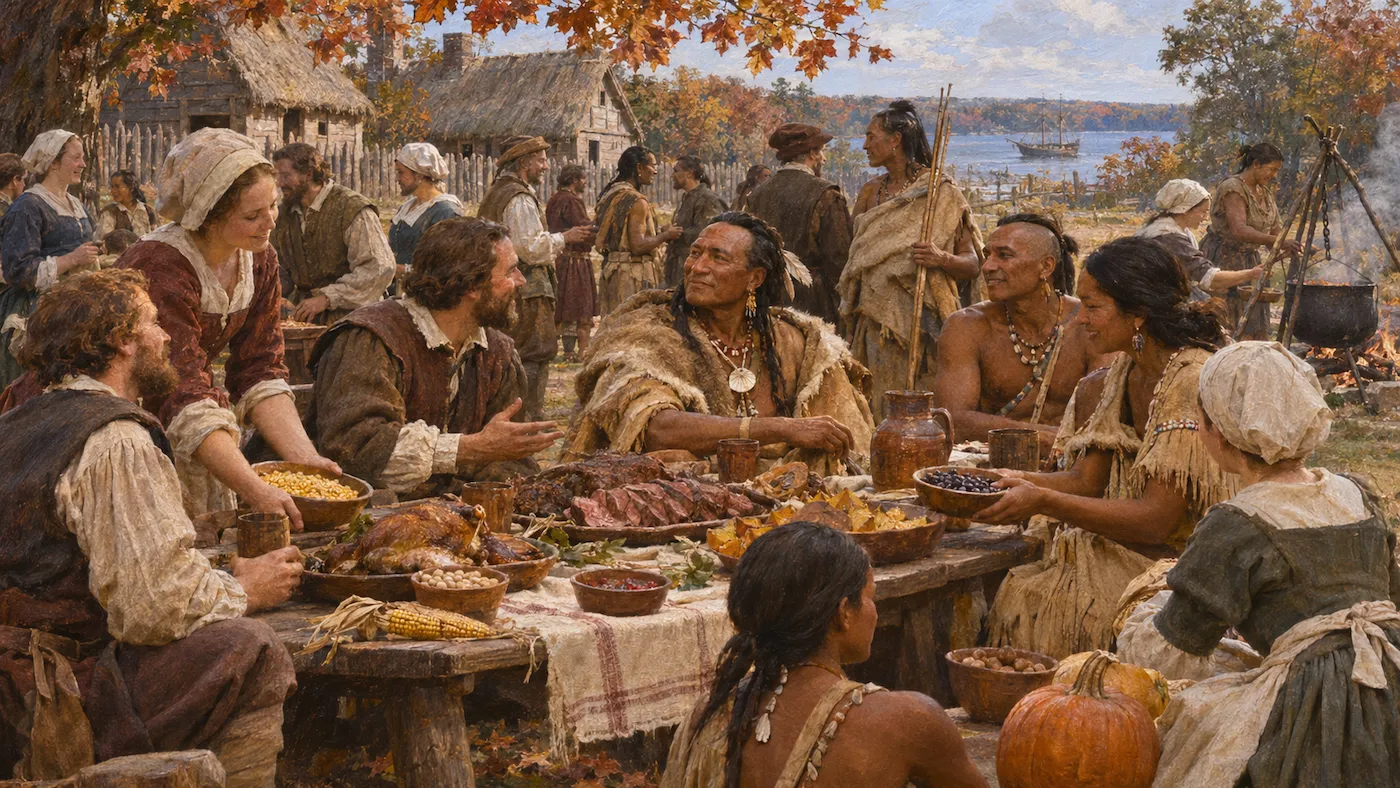
The gathering commonly remembered as the first Thanksgiving took place in the autumn of 1621 in Plymouth, Massachusetts. After enduring a devastating first winter in which nearly half of the Mayflower’s passengers died, the surviving English settlers celebrated a successful harvest.
According to the surviving eyewitness account of colonist Edward Winslow, Wampanoag leader Ousamequin, also known as Massasoit, and approximately 90 of his men joined the settlers for three days of feasting and recreation. The Wampanoag contributed five deer, while the colonists provided wild fowl.
Winslow, writing to a friend in England, credited their abundance to “the goodness of God.”
While the exact date and complete menu remain unknown, the gathering represented a period of cooperation between two very different cultures. The Wampanoag had practiced traditions of giving thanks for generations before the arrival of European settlers. Although the peace between the two peoples would not last, their gathering in 1621 remains a significant moment in American history.
Thanksgiving as we know it today developed much later. In 1863, amid the American Civil War, President Abraham Lincoln proclaimed a national day of thanksgiving. In 1941, Congress established the fourth Thursday of November as the federal Thanksgiving holiday.
More than four centuries after that Plymouth harvest, Thanksgiving remains an opportunity to reflect on our blessings, give thanks to God, care for our neighbors and appreciate the time we have with those we love.
At Saline River News, we are especially thankful for our readers, advertisers and the many people who make the communities of South Arkansas such a special place to call home.
From our family to yours, we wish you a safe, peaceful and Happy Thanksgiving.
Historical sources: Plimoth Patuxet Museums – Edward Winslow’s 1621 eyewitness account, Smithsonian National Museum of the American Indian and the United States National Archives.