



In the summer heat of July 7, 1911, as Arkansas hummed with the rhythms of a new century, Thomas Harding was born into a family of builders. His father and grandfather helped shape the face of Little Rock through architecture—sketching lines, laying foundations, giving form to dreams. Yet Harding would leave behind no buildings. Instead, he carved out his legacy through shadow and light, patiently coaxed through a pinhole.

Though his early years followed a predictable course—architecture studies, wartime service, and a long-running commercial photography studio—Harding’s life took a remarkable turn after retirement. Where others saw leisure, he saw a second act. He set aside the refined tools of modern photography and embraced the simplest version of the craft: the pinhole camera.
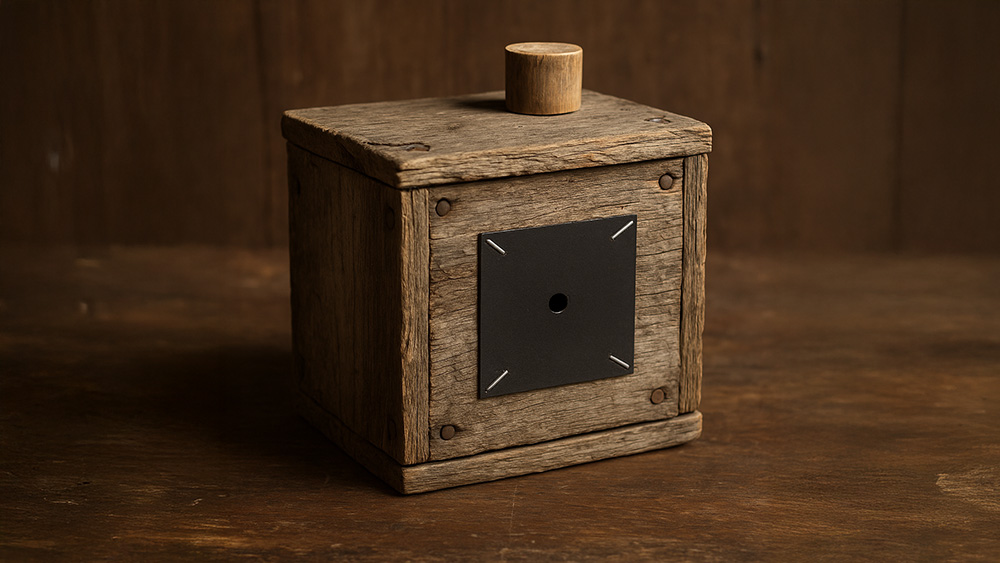
But Harding didn’t buy his cameras. He built them—from oatmeal boxes, scrap lumber, coffee cans, and duct tape. If it could be made light-tight and had a flat surface to hold film, Harding found a way to turn it into a camera. Some might’ve seen trash; he saw possibility.
Using those homemade cameras—over 150 in total—he began to document the quiet corners of Arkansas that time was slowly forgetting. His subjects weren’t grand or flashy. They were old schoolhouses, sagging barns, leaning outhouses, and country roads with no names. He traveled alone, waiting patiently while his cameras absorbed the scene—not in a snap, but over long minutes. The resulting photographs had a softness, a hush, as if the buildings themselves were whispering stories into the lens.
In 1993, Harding published One-Room Schoolhouses of Arkansas as Seen Through a Pinhole, a deeply personal collection of images and reflections. The book wasn’t just a celebration of lost architecture—it was a meditation on memory and place. Each photograph felt like a conversation with the past, slow and deliberate. His later book, An Outhouse by Any Other Name, brought the same reverence to rural necessities that most would overlook.
Harding called his work “pinography,” a word as homespun as the cameras he built. And while the term never caught on widely, the work did. By the end of the 1990s, he had earned national recognition. The Smithsonian named him one of the world’s leading pinhole photographers. His prints found homes in museums and private collections across the country. Yet through it all, Harding remained more craftsman than celebrity—quiet, thoughtful, and more likely to give a photograph away than to price it.
Friends recall a man of dry wit and patient instruction. He volunteered his time, served on local arts councils, and mentored young photographers. He believed good art didn’t have to be expensive or loud. Sometimes, it only needed a pinhole and someone willing to wait for the light to do its work.
Harding passed away in 2002. He left no skyscrapers or monuments behind, but his photographs endure as a kind of still prayer—unrushed, reverent, and rooted deeply in Arkansas soil.
On this day in Arkansas history, we remember Thomas Harding not as a man who chased the spotlight, but as one who quietly followed it—through barns and backroads, schoolhouses and shadows—believing, always, that even the smallest aperture could reveal something worth remembering.