


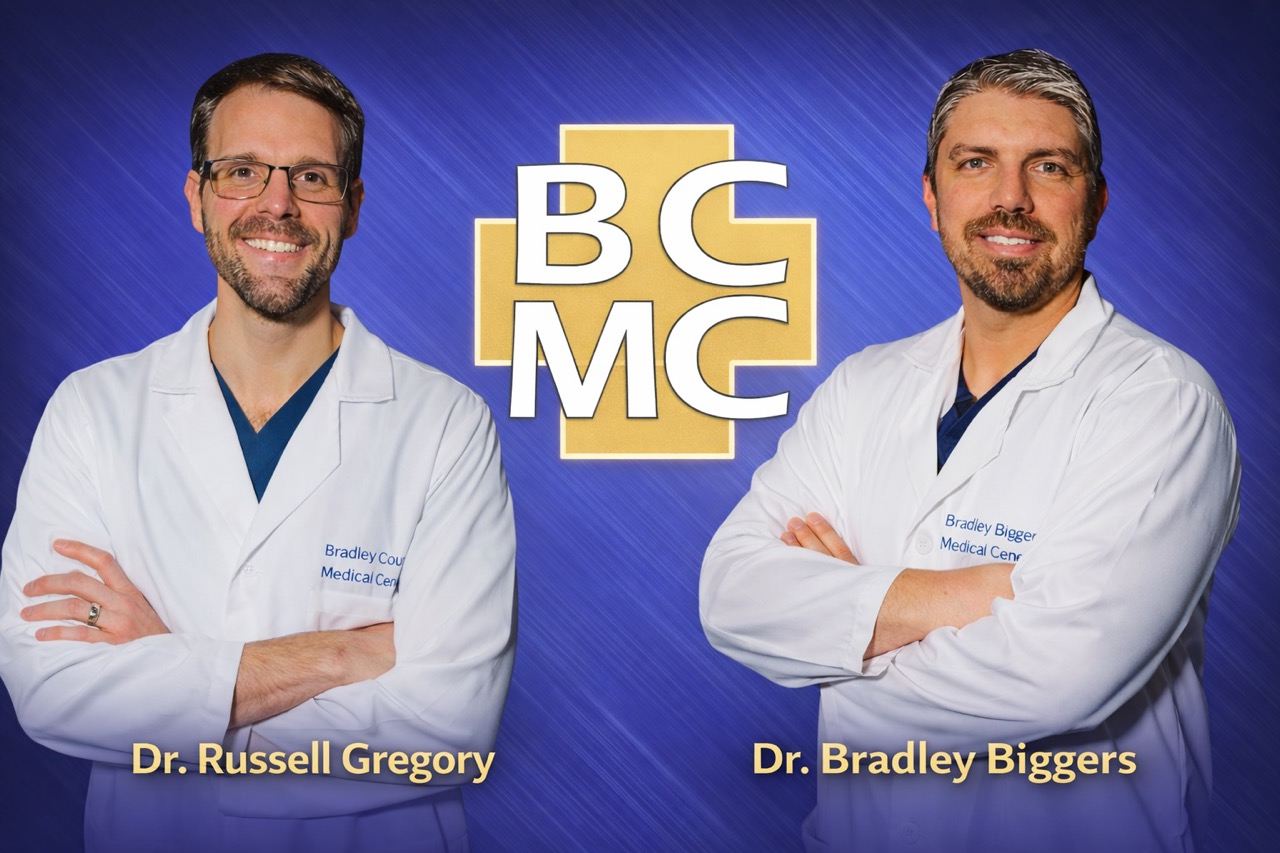
Welcome back to the third installment of the BCMC Public Health Series. I’m Dr. Bradley Biggers, and I am happy to continue this journey with you all toward better health and education.
This week, we’re tackling one of the less glamorous — but most important — topics in medicine: colon cancer screening.
Let’s be honest: the colon doesn’t exactly get much appreciation. But it works hard for you every day, and one of the best ways to return the favor is by making sure it stays healthy. That’s where colorectal cancer screening comes in.
Colorectal cancer is the second leading cause of cancer-related deaths in the United States. The encouraging news is that it is also one of the most preventable cancers. Screening can detect problems early — often before cancer even develops — and early detection saves lives. That’s a pretty good trade for a little inconvenience.
When Should You Get Screened?
If you are 45 years old or older and at average risk, it’s time to start screening. Major health organizations, including the American Cancer Society and the U.S. Preventive Services Task Force, recommend regular screening from ages 45 to 75.
Adults between 76 and 85 should discuss continued screening with their healthcare provider to determine whether it still makes sense for them.
If you have a family history of colon cancer or colon polyps, you may need to begin screening earlier, so be sure to bring that up at your next appointment.
What Are Your Screening Options?
Colonoscopy — Often considered the gold standard. A physician uses a small camera to examine the entire colon. If polyps are found, they can usually be removed during the same procedure before they ever become cancerous. If results are normal, most people only need one every 10 years. Yes, the prep is not anyone’s favorite experience but think of it as a reset button for your insides.
Stool-based tests (FIT or stool DNA tests) — These can be done at home with no sedation and minimal hassle. FIT testing is performed yearly, while stool DNA tests are typically done every three years. If a test comes back positive, a colonoscopy will still be needed for follow-up.
Flexible sigmoidoscopy — Similar to a colonoscopy but examines only the lower portion of the colon. This is generally recommended every five years.
CT colonography (virtual colonoscopy) — A specialized CT scan that creates detailed images of the colon and is usually repeated every five years.
The best screening test is ultimately the one that gets done. Any screening is far better than avoiding screening altogether.
“But I Feel Fine.”
That’s exactly why screening matters.
Colorectal cancer often develops silently, without symptoms. Polyps — small growths that can eventually become cancer — usually cause no warning signs at all. Screening allows doctors to find and remove these growths before they ever become dangerous.
What’s Stopping You?
If it’s the prep, modern options are easier than they used to be.
If it’s fear, remember that serious complications from colonoscopy are very rare.
If it’s procrastination, consider this your friendly reminder to stop putting it off.
Talk with your healthcare provider, choose the screening option that works best for you, and take care of it before it becomes a problem.
If you have questions, come see us at BCMC Rural Health Clinic, located at 304 E. Central Street in Warren. Call (870) 226-8636 to schedule an appointment — walk-ins are always welcome.
BCMC Rural Health Clinic — Where Healthcare Close to Home Matters
— Dr. B