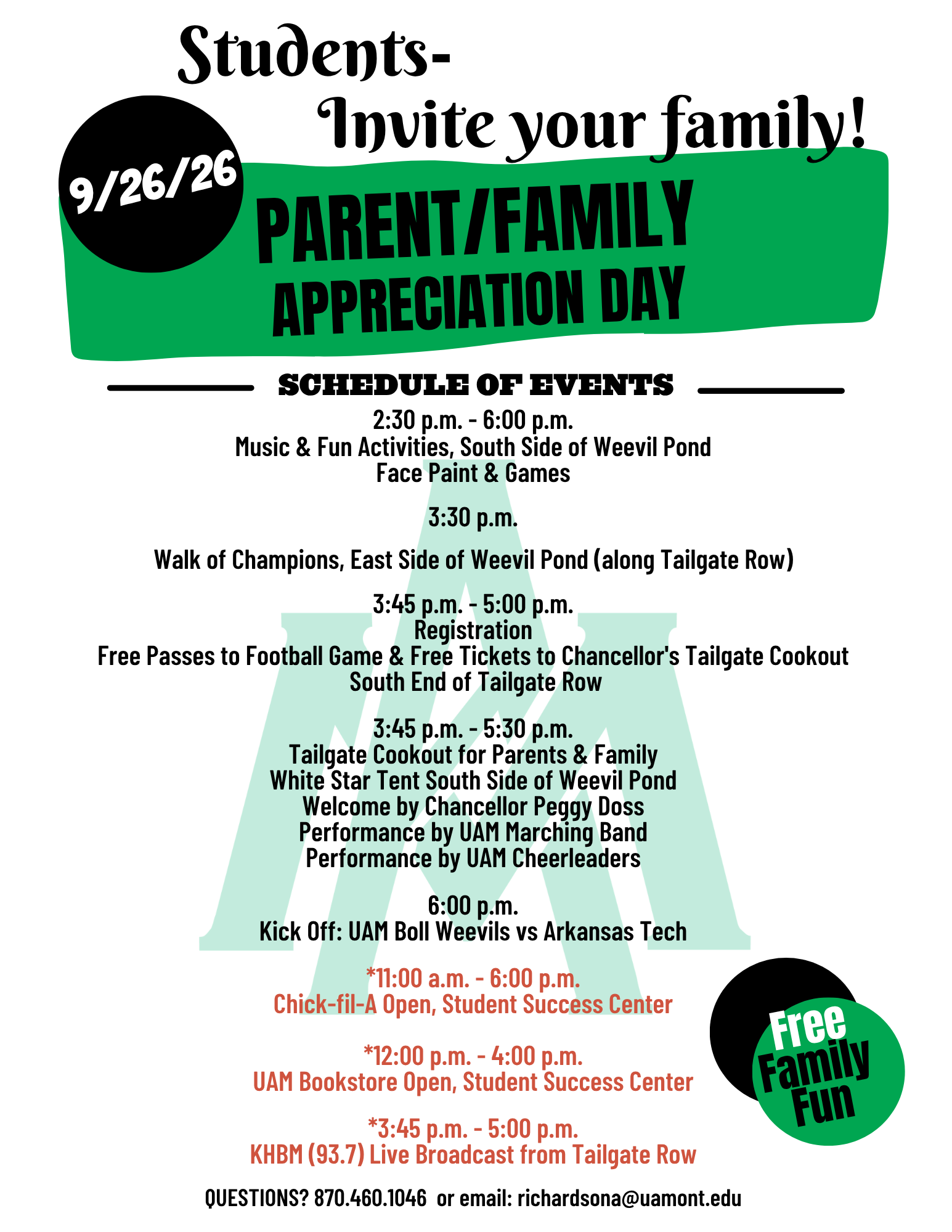





John Daly loves the Arkansas Razorbacks. Nobody reading his Facebook post this week could doubt that.
By Rob Reep
Saline River News
“I’m honestly so upset that any of our Hog fans would consider protesting or choosing not to come to our football games,” Daly wrote. Later came the challenge: “If you’re a true Razorback fan, now is the time to SHOW UP and support our team!” And finally: “PLEASE COME TO THE GAMES, FILL THE STANDS, AND LET OUR HOGS KNOW WE’RE BEHIND THEM!”
I understand the sentiment. I even admire it. There is something appealing about unconditional sports loyalty. Things are bad? You go anyway. Your team stinks? Put the shirt on and yell louder. That’s fandom at its purest and most wonderfully irrational.
But I should confess something: I am not what anyone would call a massive Razorback fan.
I hope Arkansas wins. I follow the Hogs loosely. I grew up here, so they have always existed somewhere in the background — like humidity, pine trees and people calling the Hogs in places where nobody asked them to. But I’m an Arkansas State graduate.
Over the years I’ve become less invested in college football because it gradually stopped being the sport I grew up watching.
NIL. The transfer portal. Conference realignment. Television money. Revenue sharing. For better or worse, college football has become something else.
That is why I have trouble with the idea that being a “true fan” requires buying tickets regardless of the product being put on the field. College football changed the bargain.
For generations, the sport sold us belonging. These weren’t merely players. They were our players. Freshmen became seniors. Rivalries lasted decades.
Which brings me to something I want to say unequivocally:
I support the players getting paid.
Full stop.
There is a legitimate argument that athletes were already compensated through scholarships, room and board and other benefits. Those things have real value.
But scale matters. At the elite end, college football is a massive business. Arkansas athletics reported nearly $196 million in operating revenue in fiscal 2025, with football accounting for more than $87 million. The SEC distributed more than $1 billion to its universities from the 2024-25 fiscal year.
Those are not bake-sale numbers.
So yes. Pay the players. I have a much harder time arguing that the people actually producing the spectacle should be excluded from the extraordinary amount of money generated around them.
But professionalization changes things.
As college football becomes increasingly professionalized, the expectations surrounding performance inevitably become more professionalized too.
That doesn’t mean fans should abuse players or forget they are young men still attending classes. It doesn’t mean an NIL deal suddenly turns every 18-year-old into an NFL veteran. It means being young and being expected to perform are not mutually exclusive.
I’ve seen that for years following European soccer.
I’m a huge Arsenal supporter — far more emotionally invested in Arsenal than I am in Arkansas football — and the sporting culture across the Atlantic offers a glimpse of where parts of the American system may be heading.
European soccer can be ruthless. Children enter professionally operated academies at remarkably young ages. They are trained, evaluated, promoted, loaned and released. For the fortunate few, a professional contract follows.
And when that contract is signed, expectations rise. Nobody forgets an 18-year-old player is 18. But once he signs a professional contract, his age doesn’t erase the expectation that he perform at a professional standard.
He can be a very young man and a professional athlete at the same time. Both things are true. That increasingly describes major college football.
Major college football is not identical to professional sports in every sense, and I’m not suggesting it is. Nor am I saying this is necessarily how I would like things to be. I’m simply acknowledging the reality of what the sport has become.
When schools are sharing revenue, third parties are paying for NIL rights and rosters are built through an increasingly fluid marketplace, pretending the relationship between athlete, institution and fan remains exactly what it was 30 years ago makes little sense.
I support the compensation. What I reject is the idea that college football can embrace professionalization when the checks are written, then retreat into amateurism when fans expect professional results.
You can’t have it both ways.
I understand unconditional fandom because I’m that way with Arsenal. We won the Premier League last season, ending a 22-year wait. It was glorious.
But my years supporting Arsenal have hardly been one long champagne parade. There have been brutal seasons and years when the club seemed painfully far from where supporters believed it belonged.
I never stopped supporting Arsenal.
But that’s my choice.
Who am I to judge another supporter spending an enormous amount of his own money who decides he is dissatisfied with what he is receiving?
European soccer understands this because nobody pretends it isn’t professional. Supporters protest, boo, stay away and demand changes. Sometimes they’re justified. Sometimes they’re ridiculous. Often both before halftime.
But nobody seriously believes buying a soccer ticket is a compulsory tithe proving devotion. The club sells something. The supporter decides if it is worth buying.
The word product sounds ugly when applied to college football. But at the highest level, that is increasingly what it is.
Think of a restaurant your family has loved for 30 years. The place is tied to memories that have little to do with food. Then the prices climb, the chef leaves and the menu changes.
You can still love the place. But if it charges fine-dining prices, you are allowed to expect a good meal. If you stop going until things improve, that doesn’t erase the memories. It makes you a customer.
That doesn’t mean sports fandom is only a customer relationship. Of course it isn’t. Fans are alumni, donors, parents, community members and people carrying memories built over decades. That emotional connection is exactly what makes sports different.
But emotion doesn’t erase economics.
Modern college football asks a lot of its supporters: tickets, travel, parking, concessions, merchandise, donations, NIL fundraising and premium seating.
If someone spending that money says, “I’m dissatisfied,” I have a hard time telling him the only acceptable response is to open his wallet again next Saturday. Especially when everyone else gets to make business decisions.
Players can pursue better opportunities. Coaches can leave for better jobs. Universities chase television contracts. Conferences discard tradition for larger revenues. Yet the fan is expected to operate according to the emotional rules of 1987.
Maybe that is why I’ve drifted away from college football.
The old game had continuity and roots, this wonderfully irrational sense that teams belonged to places and the people who lived there.
Maybe some of that was illusion. But illusion has value in sports. We convince ourselves that strangers wearing the correct color shirt somehow represent us.
It is absurd. It is also beautiful.
Oddly enough, I find Arsenal easier to understand.
Everybody knows the deal. Arsenal is a professional soccer club. The players are professionals. The club is a business. Supporters are paying customers.
Yet none of that stops me from caring far too much about whether a ball crosses a white line somewhere in North London.
Maybe college football eventually settles into something similar.
And I don’t think John Daly is wrong to support Arkansas unconditionally. I respect it. If that is what being a fan means to him, wonderful.
But another fan can love Arkansas just as sincerely and decide he is tired of spending hundreds or thousands of dollars on something he no longer believes is worth the cost. Neither gets to tell the other he is doing fandom incorrectly.
That, to me, is the real issue.
Players are allowed to make decisions based on opportunity. Coaches are allowed to make decisions based on money. Universities and conferences are allowed to make decisions based on revenue.
So why should the fan’s decision to stop spending his own money suddenly become a question of character or loyalty?
College football wanted the television contracts, sponsorships, revenue and freedom of a professional marketplace. Players understandably wanted — and deserved — their share.
The marketplace has arrived.
If players are free to leave for better opportunities, that’s the marketplace. If coaches leave for more money, that’s the marketplace. If universities discard tradition for greater revenue, that’s the marketplace.
And if the guy in Section 103 decides the product is no longer worth the price of admission? That’s the marketplace too.
College football cannot ask for a professional marketplace and then demand amateur loyalty from the customer.