




By Traci Rushing
University of Arkansas Division of Agriculture
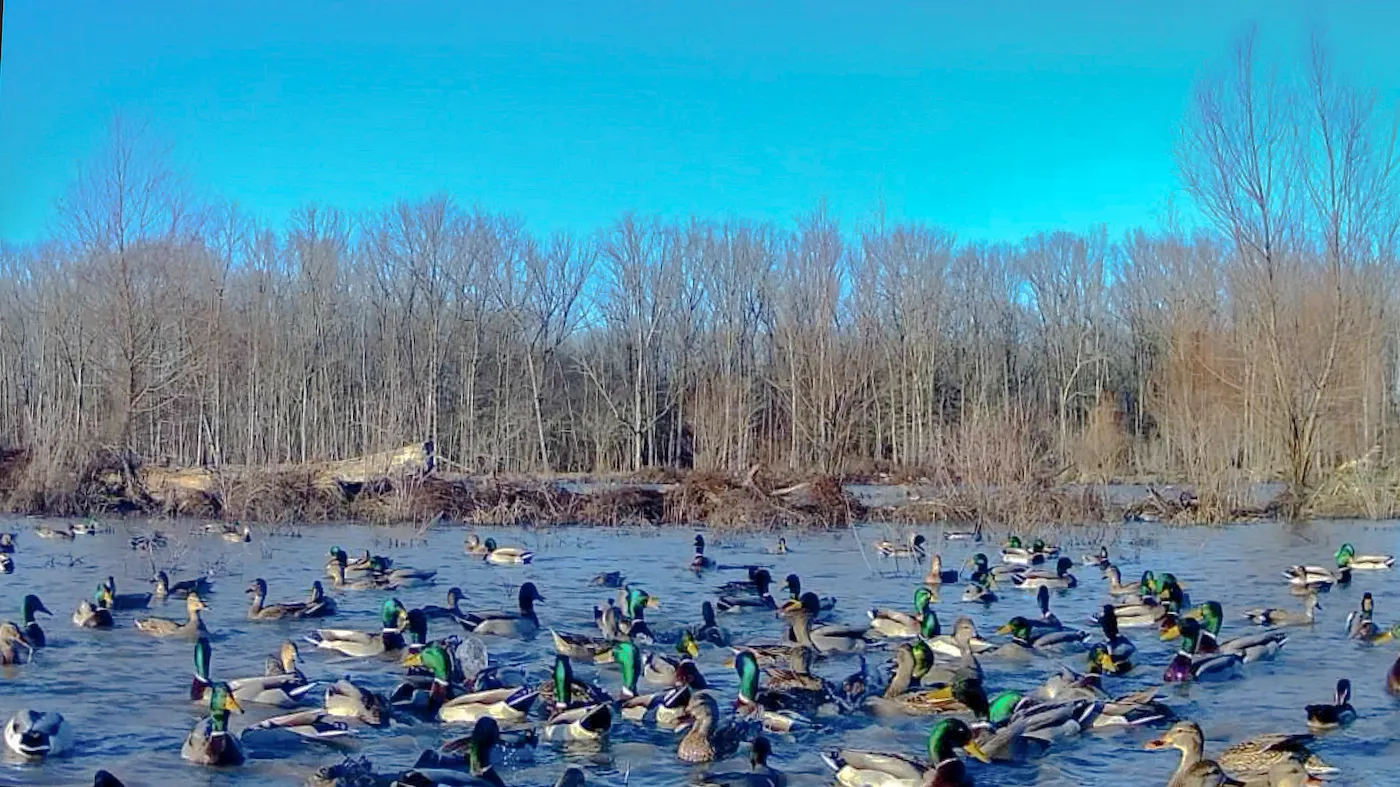
MONTICELLO, Ark. — While hunting less may seem like an unlikely way to harvest more ducks, hunting clubs in Southwest Arkansas are putting that principle into practice. By reducing disturbance, limiting hunting pressure and establishing designated rest areas, the clubs are using research-based management strategies designed to keep more waterfowl on their properties.
These management practices were informed by research from the Osborne Lab, led by Douglas Osborne, wildlife ecology professor at the University of Arkansas at Monticello and director of the Snowden Waterfowl Center of Excellence.
Osborne, who is also part of the Arkansas Forest Resources Center, has studied waterfowl movement, habitat use and management in Arkansas for over 10 years. The Arkansas Forest Resources Center is part of the Arkansas Agricultural Experiment Station, the research arm of the University of Arkansas Division of Agriculture.
With the support of landowners and duck hunters, his research is providing a better understanding of how ducks use the landscape and giving landowners the information they need to make more informed management decisions.
For Brandon Wren, a member of Cypress Bayou Hunting Club, Osborne’s research helped provide scientific evidence to guide the club’s management decisions and later confirmed that those practices were effective in their region.
Let them rest
Cypress Bayou began implementing Osborne’s management recommendations in 2024 by creating a large rest area. Tracking data later confirmed that ducks using the area were staying there rather than constantly moving with each new weather system, reinforcing the club’s decision to protect and expand areas where ducks could rest undisturbed.
“If you want your hunting areas to be good, you have to have a place for birds to stay rested and undisturbed,” Wren said. “It’s almost like you’re keeping a bounty that you’re able to take care of and hunt throughout the rest of the season.”
The club also implemented several other management changes, including reducing hunting hours, idling boat traffic and restricting access to its reservoirs. Wren said the combined changes have had a noticeable impact. By ending hunting at 10 a.m. instead of noon, the club reduced daily hunting hours by 40 percent. Since implementing the changes, hunters have been more frequently able to reach their daily harvest limits.
“Some of the older members who have kept diaries have said the last two Januarys were the best they’ve had,” Wren said. “Some of them have been on the property for more than 30 years.”
Reduce disturbance
Gary Dan Futrell, a member of Po-Boy and Yellow Creek Hunting Clubs, has taken a similar approach. After learning about Osborne’s research, Futrell worked to bring the information back to his hunting clubs and use it to guide habitat and hunting decisions.
One of the biggest lessons, he said, was the importance of reducing disturbance and allowing ducks to remain comfortable in an area.
“When you get a flight of ducks, that’s our tribe,” Futrell said. “We want to grow that tribe. If we understand our resources better, we can manage them better.”
Beyond changes to hunting practices, clubs are also focusing on habitat management by establishing designated waterfowl rest areas and developing moist-soil units to attract and hold ducks throughout the migratory season.
Protect the hens
Futrell said the clubs have also placed greater emphasis on protecting hens. Rather than viewing each duck as an opportunity to harvest, hunters are being encouraged to let hens go when the situation calls for it.
“The importance of laying off that hen isn’t just about that one duck,” Futrell said. “We’re in a period of decline, and it may take several years to recover. You have to let the hens fly so they can nest and return to our wintering grounds.”
Sportsmen to conservationists
The research has shifted how participating hunters approach duck management. Rather than focusing solely on harvest numbers, Futrell said, they are thinking more about how to keep ducks on the landscape, minimize disturbance and improve habitat.
Futrell said that shift represents something bigger than improved hunting.
“Dr. Osborne’s study has really turned us from sportsmen into conservationists,” Futrell said. “We are the real winners here. I’m so thankful he took the time to look at our flyway and share his data.”
More information about Osborne’s research and management recommendations is available in the Osborne Lab Annual Report. Printed copies are available at Mack’s Prairie Wings in Stuttgart, Arkansas, and the Henry H. Chamberlin Forest Resources Complex on UAM’s campus.
To learn more about ag and food research in Arkansas, visit aaes.uada.edu. Follow the Arkansas Agricultural Experiment Station on LinkedIn and sign up for our monthly newsletter, the Arkansas Agricultural Research Report. To learn more about the Division of Agriculture, visit uada.edu. To learn about extension programs in Arkansas, contact your local Cooperative Extension Service agent or visit uaex.uada.edu.