


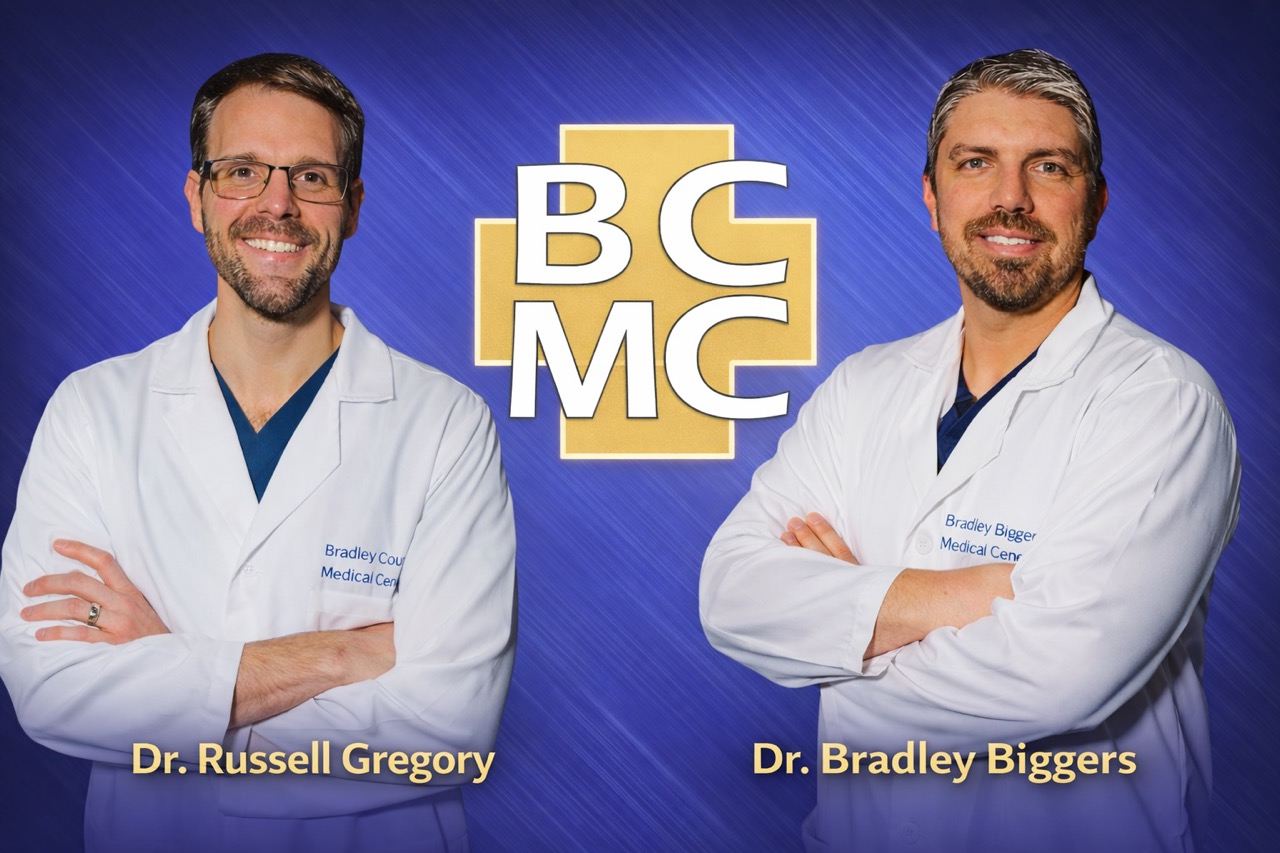
Welcome! I’m Dr. Bradley Biggers. My colleague, Dr. Russell Gregory, and I are starting a recurring health column to help answer common health questions and improve the health of our community. If you have topics you’d like to discuss, please message us on the BCMC Facebook page. We look forward to bringing you clear, up-to-date, and practical health information. Let’s get started!
High blood pressure—also called hypertension—is often known as the “silent killer.” Why? Because most people feel completely normal, even when their numbers are too high. You can go years without symptoms while it quietly damages your heart, brain, and kidneys.
What is a normal blood pressure?
Here are the numbers you should know:
● Normal: less than 120/80
● Elevated: top number 120–129 and bottom number less than 80
● High blood pressure: 130/80 or higher (on a regular basis)
High blood pressure is one of the leading causes of:
● Heart attacks
● Strokes
● Kidney failure
● Heart failure
● Memory problems later in life
The scary part is—you may feel fine until something serious happens. Both numbers in your blood pressure matter, and even small increases can raise your risk.
Anyone can develop high blood pressure, especially as we age. Your risk is higher if you:
● Are overweight
● Eat a lot of salty or processed foods
● Don’t get much physical activity
● Smoke or use tobacco
● Drink alcohol regularly
● Have a family history of high blood pressure
● Have too many kids (this is a joke I just added for myself)
The good news: high blood pressure is treatable—but you have to know your numbers.
Check your blood pressure at home, at the pharmacy, or at your doctor’s office. Write it down. If you’re not checking it, you’re flying blind.
These simple steps can lower your blood pressure by 5–8 points or more:
● Cut back on salt
Most salt comes from packaged and restaurant foods—not the saltshaker. Cook more at home and read labels when you shop. Trade canned goods for frozen items instead
● Move your body
Aim for at least 150 minutes of moderate activity each week. A 30-minute walk most days is a great place to start.
● Lose weight if needed
Even losing 5–10 pounds can make a difference. Every 2 pounds lost can lower blood pressure by about 1 point.
● Eat a heart-healthy diet
Focus on fruits, vegetables, whole grains, and lean proteins. The DASH diet is a proven way to lower blood pressure.
● Limit alcohol
No more than 1 drink per day for women or 2 for men. Less is even better.
Many people do—and that’s okay. High blood pressure often runs in families, and lifestyle changes alone aren’t always enough.
If you’re prescribed medication, take it every day—even when you feel fine. Remember: it only works if you take it.
● If your blood pressure is consistently 130/80 or higher, talk to your doctor.
● If you ever see 180/120 or higher, this is an emergency—seek care immediately.
High blood pressure doesn’t have to lead to serious problems—but only if you take it seriously.
Check it. Track it. Treat it.
If you have questions, come see us at 304 E Central in Warren. Call (870) 226-8636 for an appointment—walk-ins are always welcome.
Let’s learn and grow together.
BCMC Rural Health Clinic: Where Healthcare Close to Home Matters