




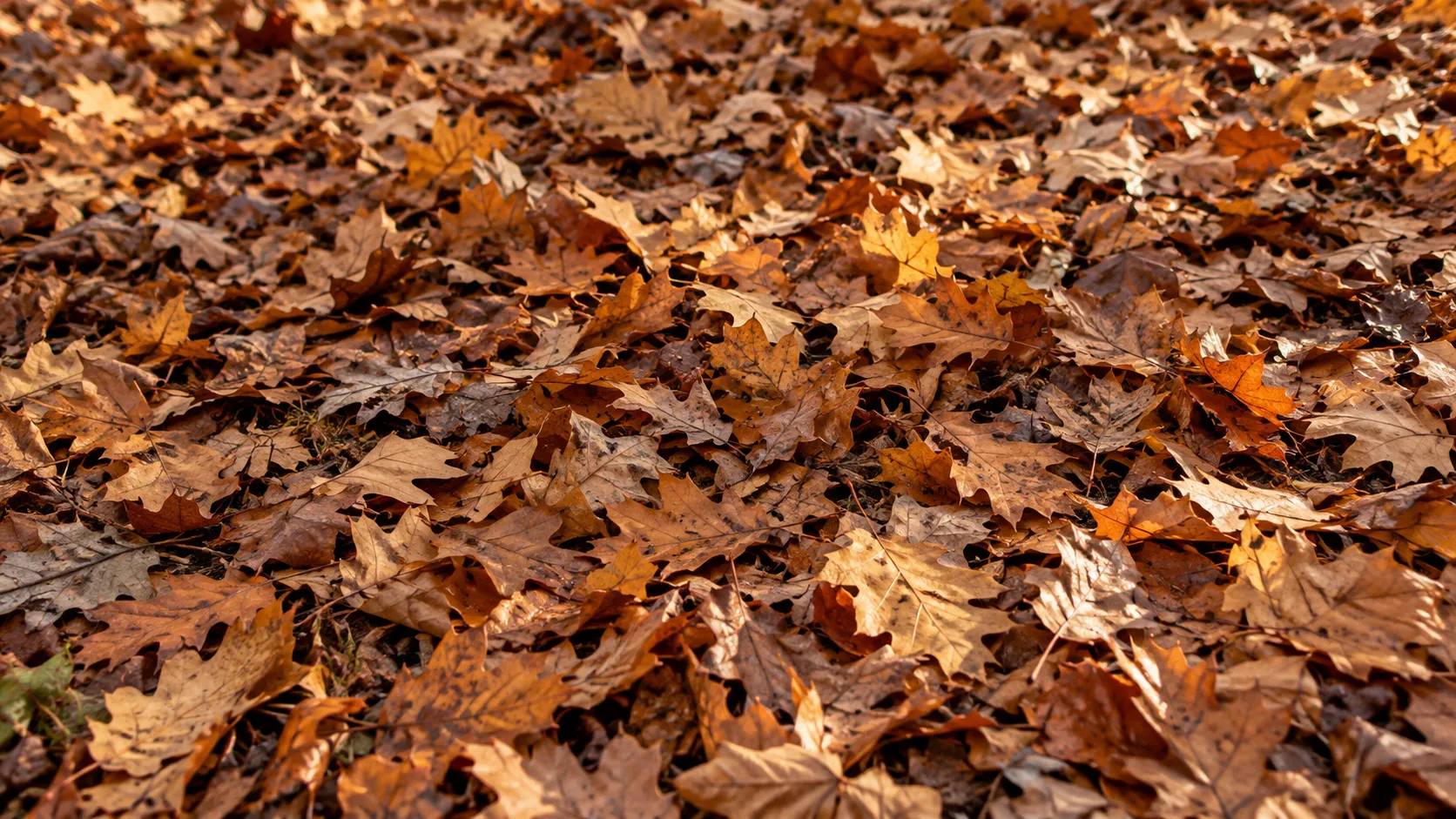
Every fall, the same routine plays out across South Arkansas.
Leaves turn yellow, orange and brown, tumble from the trees, cover lawns and driveways — and then the rakes, blowers and bags come out.
For generations, a freshly raked lawn has been considered part of keeping a tidy yard. But those fallen leaves aren’t necessarily something that needs to be hauled away.
In fact, keeping at least some of them on your property can be good for your lawn, your trees, your garden and the small wildlife that lives around your home.
Fallen leaves are natural fertilizer
A tree spends months pulling nutrients from the soil and using them to produce leaves. When those leaves fall and decompose, some of that material is returned to the ground.
Leaves contain nutrients and organic matter that can improve soil as they break down. Rather than bagging all of that material and sending it elsewhere, homeowners can allow nature to recycle it right where it fell.
One of the easiest ways to do that on a lawn is simply to mow over the leaves.
A lawn mower can chop dry leaves into small pieces that settle between the blades of grass and gradually decompose. As long as the layer isn’t excessively thick, those shredded leaves can disappear surprisingly quickly.
It essentially turns something many homeowners consider yard waste into free soil amendment.
Your trees don’t expect bare ground
Take a walk through an Arkansas forest in November and you’ll notice something you rarely see in a landscaped yard: exposed soil beneath the trees.
In nature, fallen leaves collect around the base of trees year after year.
That layer helps conserve soil moisture, moderates soil temperature and eventually decomposes into organic material. It is part of the natural system that trees evolved with.
Instead of removing every leaf beneath a shade tree, homeowners can allow some leaves to remain under the canopy or move leaves from the lawn into landscaped areas around trees and shrubs.
A loose layer of leaves can essentially serve as natural mulch.
Just avoid piling leaves tightly against the trunk of a tree. Like traditional mulch, they are better spread around the tree rather than stacked directly against the bark.
Leaves provide shelter for more than you might realize
A layer of fallen leaves can also become winter habitat.
Numerous insects and other small creatures spend part of their life cycle beneath leaves or inside the leaf litter. Some butterflies and moths overwinter as eggs, caterpillars or pupae among fallen leaves.
Those insects are also an important part of the food chain for birds and other wildlife.
A perfectly cleaned yard may look neat to us, but from the perspective of many backyard creatures, it can remove much of their winter shelter.
Leaving leaves in garden beds, beneath shrubs, along woodland edges or in a less-used corner of the property can provide habitat without requiring homeowners to surrender the entire yard.
Don’t just let a foot of leaves sit on the grass
There is an important distinction between leaving leaves and allowing a thick, wet blanket of leaves to cover a lawn for months.
A heavy layer can block sunlight and air from reaching turfgrass and may create conditions that damage the lawn underneath.
The solution isn’t necessarily to remove every leaf.
Instead, mow them into smaller pieces, rake some into flower beds, place them beneath trees or add them to a compost pile.
If leaves are falling faster than they can decompose, spreading them around the property is often better than concentrating them in one place.
Leaves can improve garden soil
Gardeners may have another use for them.
Leaves can be added to compost piles or collected and allowed to slowly decompose into what gardeners sometimes call leaf mold — a dark, crumbly material that can improve soil structure and its ability to retain moisture.
Dry leaves are particularly useful as a carbon-rich material in compost when mixed with greener materials such as grass clippings and kitchen vegetable scraps.
And unlike bags of mulch, soil conditioner or compost purchased from a store, the trees deliver leaves to the yard for free every autumn.
Keep them out of the street
There is one place leaves generally shouldn’t remain: streets, gutters and storm drains.
Large piles of leaves can block drainage and contribute to clogged stormwater systems. When cleaning driveways or sidewalks, blowing leaves into the street simply moves the problem somewhere else.
Moving those leaves back into the yard, beneath trees or into garden beds puts them where they can actually be useful.
Maybe the goal shouldn’t be a leaf-free yard
None of this means homeowners have to let their properties become completely covered in leaves.
Walkways still need to be cleared. Thick piles on lawns should be dealt with. Some leaves may still need to be collected.
But the traditional idea that every fallen leaf must be raked, bagged and removed isn’t necessarily helping the yard.
A little messiness can actually be healthy.
So this fall, before filling another bag with leaves, consider running the mower over them or moving them beneath a tree or into a flower bed instead.
What looks like fall cleanup to us is really part of a natural recycling system that has been taking place in Arkansas forests for thousands of years.
Sometimes the best thing you can do for your yard is simply let a little bit of fall stay where it lands.