



Today, the United States turns 250 years old.
That is a birthday worth celebrating.
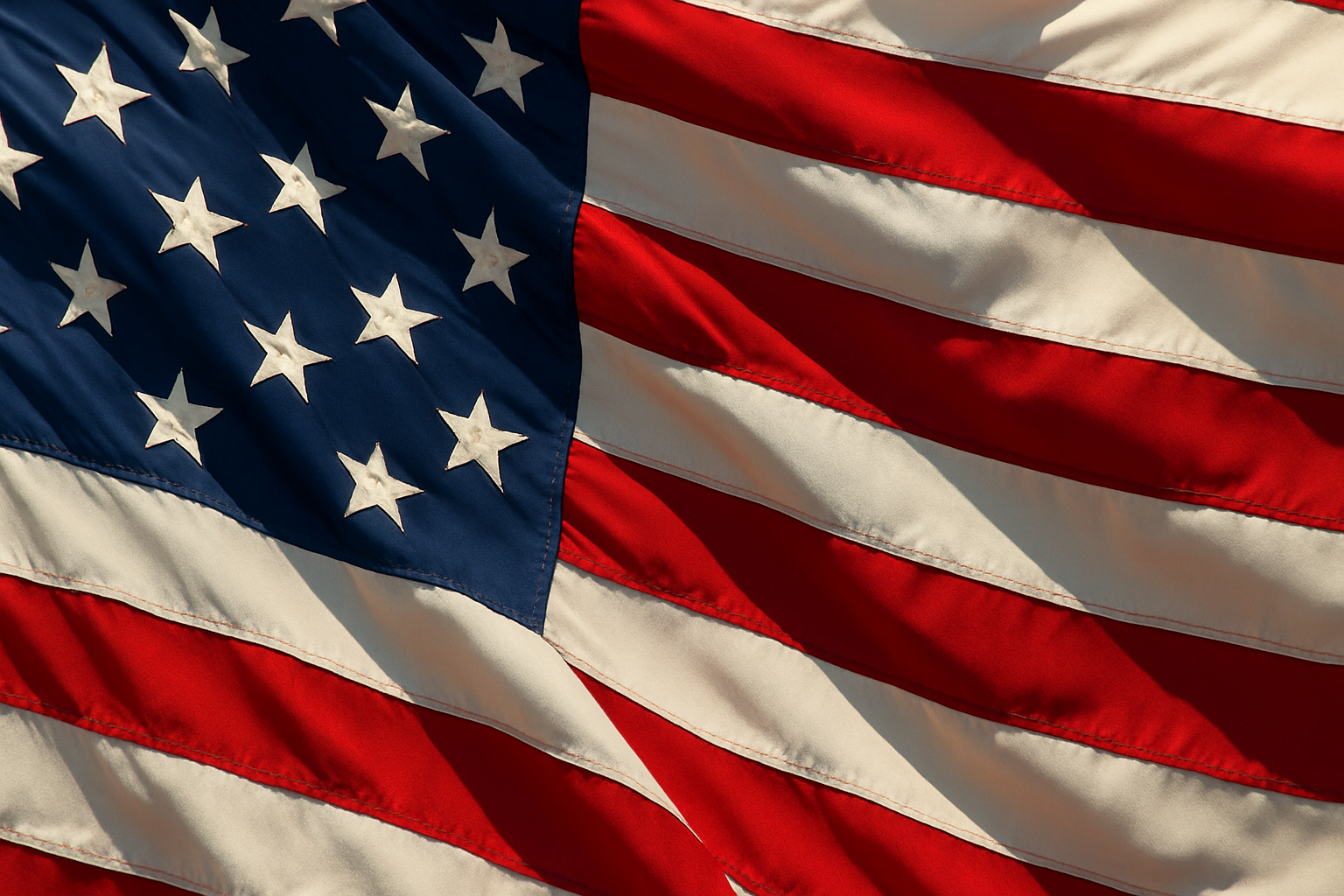
It is worth celebrating with flags on porches, red, white and blue shirts, fireworks after dark, families gathered in backyards and somebody standing over a grill acting like the fate of the republic depends on getting the burgers right.
It is worth celebrating in South Arkansas, where America looks like church signs and Little League fields, farms and rivers, family businesses and volunteer fire departments, country roads and front porches. It looks like people who get up early, work hard, raise their children, care for neighbors and try to leave their small part of the world better than they found it.

By Rob Reep
Saline River News
I love this country.
And I love the idea that gave this country its beginning.
On July 4, 1776, the Continental Congress adopted a document announcing that the American colonies would no longer submit to British rule. But Thomas Jefferson’s Declaration of Independence was more than a notice that 13 colonies were leaving the British Empire.
It made a claim about the rights of all people.
“We hold these truths to be self-evident,” the Declaration says, “that all men are created equal,” and that they are endowed by their Creator with certain unalienable rights, including “Life, Liberty and the pursuit of Happiness.”
Those words are so familiar that it is easy to hear them as decoration.
They are not decoration.
They are a radical claim.
They say that rights are not gifts from a king. They do not come from a president, a governor, a political party, a preacher, a wealthy donor, a television personality or whoever happens to be winning the argument at a given moment.
They belong to people.
The Declaration goes even further. It says that governments are instituted to secure those rights and derive “their just powers from the consent of the governed.”
That is the heart of the American idea.
The people are not subjects. Government is not supposed to demand devotion as though it owns the country. Public officials are not masters over the people. Their authority begins with the people, and it is supposed to answer to the people.
That was a dangerous idea in 1776.
The men who declared independence knew they were not signing onto a guaranteed success story. They were challenging the most powerful empire on earth. The Declaration closed with a pledge of “our Lives, our Fortunes and our sacred Honor.”
They understood the stakes.
But the words Jefferson wrote were bigger than the men who wrote, approved and signed them.
They were better than the country that first proclaimed them.
America did not live up to them in 1776.
Not even close.
At the very moment the country declared that all men were created equal, enslaved people were held in bondage across the colonies. Jefferson himself enslaved people. Women had no equal voice in the political life of the new nation. Indigenous people were being driven from their lands through broken promises, forced removal and violence.
The contradiction was not small. It was central.
The Declaration announced a universal truth that the United States was nowhere near prepared to honor.
That does not make the words meaningless.
It makes them more demanding.
For 250 years, much of the American story has been the long argument over who those words belong to. Enslaved people and their descendants demanded that America mean what it said. Women demanded it. Workers demanded it. Immigrants demanded it. Civil-rights leaders demanded it. Ordinary Americans who had been denied a full share in the nation’s promise kept returning to the country’s own founding language and asking it to be true.
And sometimes—slowly, imperfectly and at great cost—the country moved closer.
That is what the Constitution meant when it spoke of forming “a more perfect Union.”
Not a perfect union.
Not a finished union.
A more perfect one.
That phrase leaves room for humility. It recognizes that America can be loved deeply while we still tell the truth about its failures. It recognizes that patriotism is not pretending our country has always gotten everything right.
Patriotism is loving it enough to want it to become more faithful to its own best ideas.
Jefferson’s original draft of the Declaration contained a passage Congress removed before the document was adopted. Condemning the slave trade, Jefferson accused King George III of having “waged cruel war against human nature itself,” violating the “sacred rights of life and liberty” by capturing and carrying people into slavery. He called that ruler the “Christian King of Great Britain.”
Those words should make us uncomfortable.
They should make us uncomfortable because Jefferson wrote them while enslaving people himself.
He understood that slavery was wrong. He spoke against it. He advocated gradual emancipation. Yet he did not free the people he enslaved or bring the moral truth he could see on paper into full practice in his own life.
That does not excuse him.
It reveals something hard that every sinner can recognize: we are often better at identifying evil in the world than we are at confronting the ways it lives in us.
Jefferson could condemn slavery in principle while remaining entangled in it himself.
America has spent 250 years living inside that same tension. We have often declared liberty in our finest language while withholding it in practice. We have sometimes wrapped cruelty in the language of faith, patriotism, order or national greatness.
But a flag cannot make cruelty virtuous.
Religious language cannot turn injustice into justice.
And no leader should ever be so loved, so feared or so excused that Americans forget the basic truth at the center of the Declaration: power belongs to the people.
That means liberty has to be more than the freedom to agree.
It has to mean that people may passionately disagree with their leaders without being called traitors or enemies of the country. It has to mean that criticism is not treason. It has to mean that dissent is not disloyalty.
In a free country, one of the most patriotic things a citizen can do is ask hard questions of those in power.
A free people ought to be able to handle an argument.
We ought to be strong enough to hear criticism without treating every question as an attack. We ought to protect the rights of people who vote differently, worship differently, look differently or see the world differently. We ought to understand that liberty is not weakened when people we disagree with possess it.
It is proven.
Today, I will celebrate the United States proudly.
I will wear red, white and blue. I will cook burgers with my kids. I will enjoy the fireworks, the noise, the laughter and the familiar feeling of an American Fourth of July.
I will celebrate the country I love.
And I will celebrate the idea born from Jefferson’s pen that the people with whom I disagree—politically, religiously or otherwise—still possess the same inherent claim to life, liberty and the pursuit of happiness that I do.
Not because I have surrendered my convictions.
Because I believe in them.
The American experiment is messy. It is loud. It is imperfect. It can be frustrating beyond measure.
But 250 years later, it is still worth believing in.
Happy birthday and God bless the United States of America!